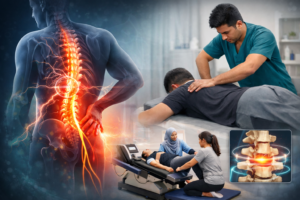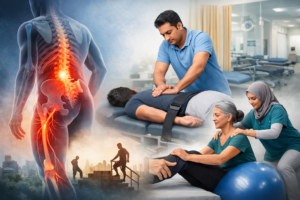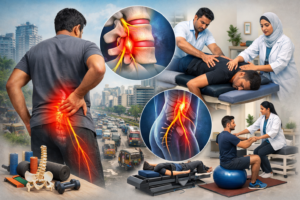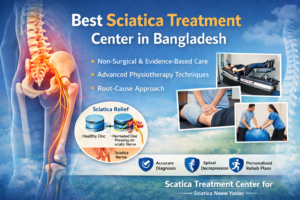
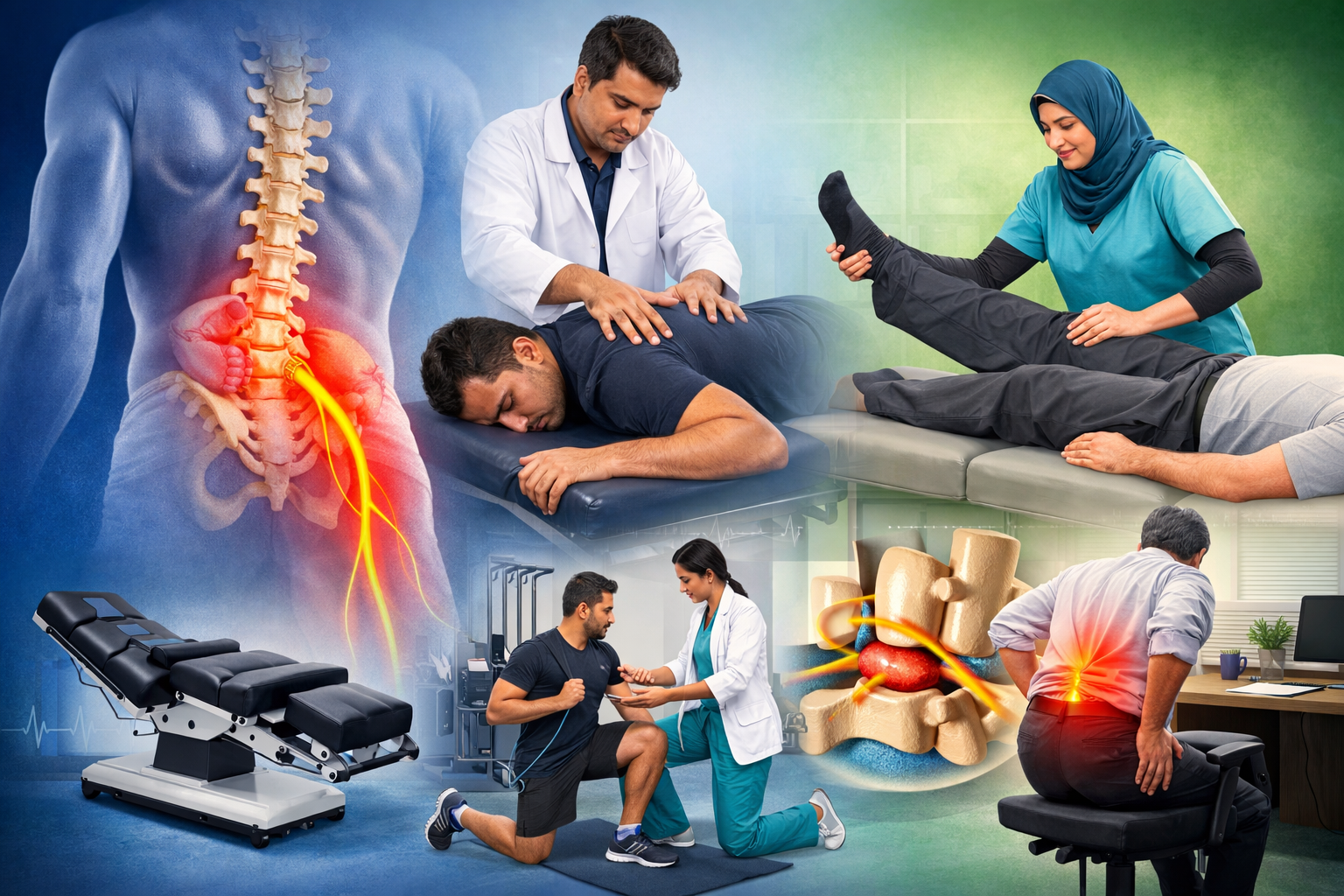
Sciatica is a common nerve-related condition that causes pain starting from the lower back and radiating through the buttock, thigh, and sometimes down to the leg and foot. It occurs when the sciatic nerve becomes irritated or compressed. Besides pain, patients may also experience numbness, tingling, muscle weakness, and difficulty walking or sitting for long periods. In Bangladesh, sciatica is becoming increasingly common due to sedentary lifestyles, long working hours, poor posture, heavy lifting, and lack of proper spinal care.
Many people initially rely on painkillers, injections, or prolonged rest for relief. While these methods may reduce pain temporarily, they often fail to treat the underlying cause of nerve compression. In some cases, patients are advised surgery before trying proper non-surgical treatment. However, modern medical evidence shows that most sciatica cases can be successfully treated through structured physiotherapy and conservative spine care.
ASPC Manipulation Therapy Centre is widely recognized as one of the leading centers for non-surgical sciatica treatment in Bangladesh. The center focuses on identifying and treating the root cause of nerve irritation rather than simply controlling symptoms. Through advanced manual therapy, spinal care techniques, and personalized rehabilitation programs, ASPC aims to restore normal movement and prevent recurrence.
Under the clinical expertise of Dr. Mohammad Shahadat Hossain and the rehabilitation guidance of Dr. Sapia Akter, ASPC provides patient-centered and evidence-based treatment for sciatica. Their combined approach emphasizes accurate diagnosis, targeted physiotherapy, posture correction, and long-term rehabilitation, helping patients recover safely and return to their normal daily activities without unnecessary surgery.
Understanding Sciatica: A Nerve-Based Condition
Sciatica is a symptom complex caused by irritation or compression of the sciatic nerve or its nerve roots in the lumbar spine. The sciatic nerve originates from the lower spinal segments and travels through the pelvis and down each leg. When this nerve is compressed or inflamed, pain radiates along its pathway.
Unlike localized lower back pain, sciatica often presents as sharp, burning, shooting, or electric shock–like pain. Some patients experience pain predominantly in the leg rather than the back. Others may notice weakness, altered sensation, or heaviness in the limb. Understanding the nerve-based nature of sciatica is crucial because treating only the back pain without addressing nerve mechanics leads to incomplete recovery.
Common Causes of Sciatica in Bangladesh
Structural Causes
- Lumbar disc herniation (slipped disc)
- Degenerative disc changes
- Lumbar spinal stenosis
- Tight hip or piriformis muscles
Lifestyle Factors
- Prolonged sitting with poor posture
- Incorrect lifting techniques
- Weak core and back muscles
- Occupational strain
Office workers, drivers, garment workers, shopkeepers, and manual laborers are particularly vulnerable due to repetitive stress and lack of early intervention.
How Sciatica Affects Daily Life
Sciatica can have a profound impact on physical, emotional, and social well-being. Patients often report:
- Difficulty sitting for more than a few minutes
- Pain during walking or standing
- Inability to work efficiently
- Disturbed sleep due to leg pain
- Fear of movement
- Emotional stress and frustration
Without proper treatment, sciatica may progress from an acute episode to a chronic condition.
Why Choosing the Right Sciatica Treatment Center Matters?
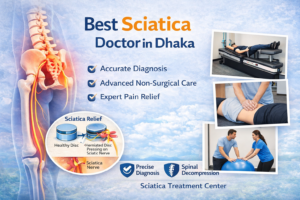
Sciatica is frequently mismanaged because treatment is often limited to pain suppression. However, lasting recovery depends on addressing the root cause of nerve irritation, not just symptoms. The best sciatica treatment centers focus on:
- Accurate Diagnosis: Precision in finding the compression source.
- Non-Surgical Care: Evidence-based, ethical alternatives to surgery.
- Progressive Rehab: Building strength and flexibility long-term.
- Education: Empowering patients to prevent recurrence.
ASPC Manipulation Therapy Centre: A Nationally Trusted Facility
ASPC Manipulation Therapy Centre is widely respected for its excellence in non-surgical spine and nerve pain management. The center does not follow a “one-size-fits-all” approach. Instead, each patient receives a customized treatment plan based on their diagnosis, severity, lifestyle, and goals.
Dr. Mohammad Shahadat Hossain, PT
Dr. Mohammad Shahadat Hossain, PT, is highly regarded for his expertise in spinal biomechanics and nerve-related pain conditions. His clinical approach emphasizes careful assessment and logical treatment progression.
- Precise identification of nerve compression sources
- Expertise in disc-related sciatica
- Advanced non-surgical spine care
- Focus on long-term functional recovery
Dr. Sapia Akter, PT
Dr. Sapia Akter, PT, plays a critical role in restoring movement, strength, and confidence in sciatica patients. Her rehabilitation programs are designed to ensure that improvements achieved during treatment are maintained long term.
- Gradual, pain-respecting exercise progression
- Special focus on elderly and female patients
- Emphasis on recurrence prevention
- Functional training for daily activities
Sciatica Treatment at ASPC: The 10-Phase Recovery Path
Patient Satisfaction and Outcomes
Patient satisfaction is a cornerstone of care at ASPC Manipulation Therapy Centre. Many patients share feedback regarding the clear explanation of their diagnosis, the honest discussion of options, and the gradual but lasting improvement they experience. Patients often state that they feel “listened to” and “guided properly,” which plays a major role in successful recovery.
Institutional Comparison: Spine-Focused Precision
Bangladesh has several recognized institutions like CRP (Centre for the Rehabilitation of the Paralysed), NITOR (Pongu Hospital), and BHPI. These facilities provide vital large-scale trauma and general rehabilitation services. However, due to large patient loads, highly specialized and individualized spine-focused care for sciatica can sometimes be limited.
In contrast, ASPC Manipulation Therapy Centre stands out by focusing exclusively on identifying and correcting the mechanical and functional problems that lead to nerve compression. While many clinics rely on passive machines (ultrasound, heat therapy), ASPC emphasizes precise clinical reasoning and hands-on manual therapy. This depth of assessment allows patients to experience significant improvement without requiring surgical intervention.
Your Journey to a Pain-Free Life Starts Here
Sciatica is a serious condition, but it doesn’t have to be permanent. Through the combined expertise of Dr. Mohammad Shahadat Hossain and Dr. Sapia Akter, ASPC offers a patient-centered approach that restores function and prevents future recurrence.
Safe • Effective • Non-Invasive Spinal Care