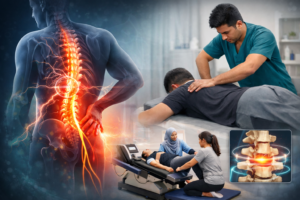
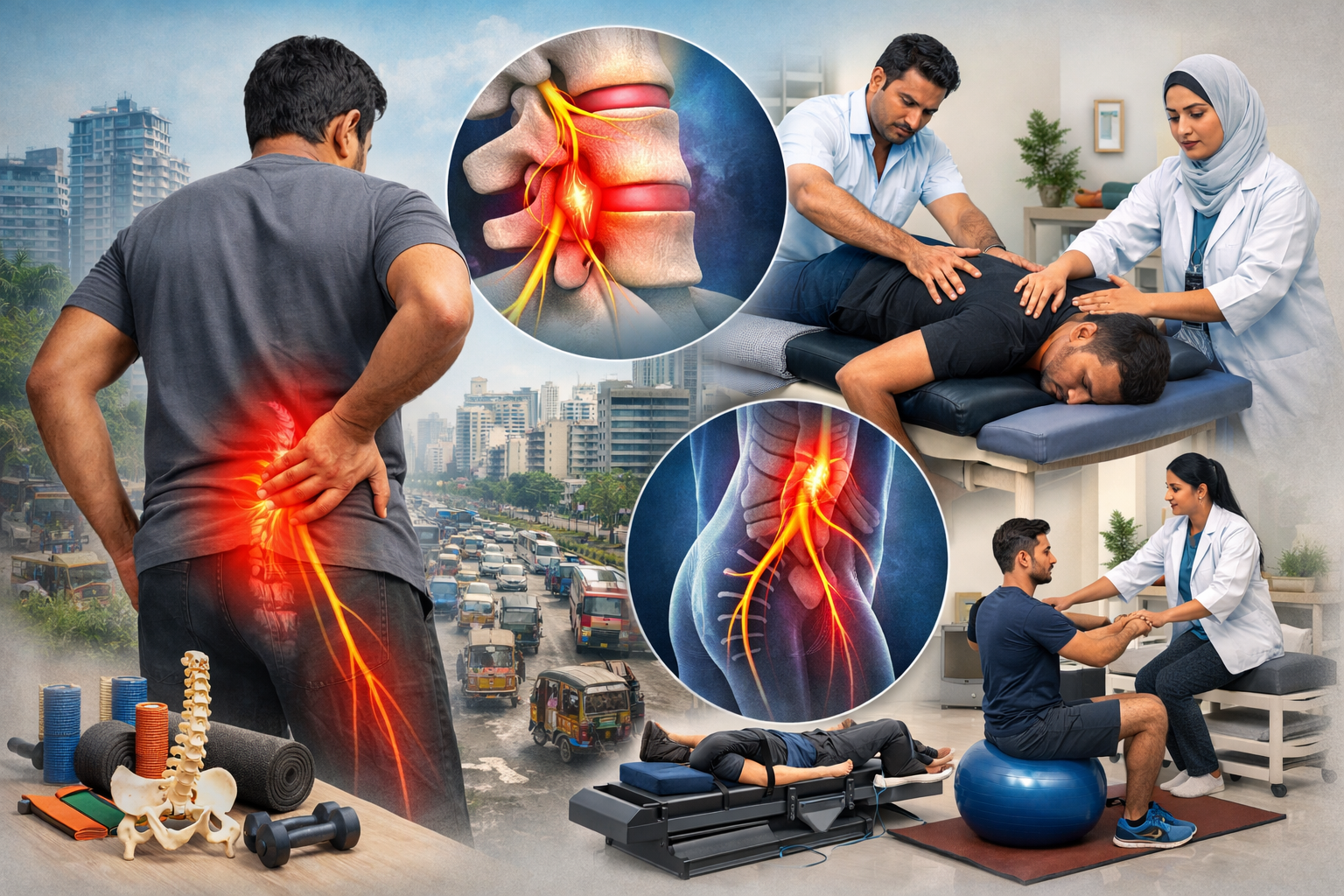
Sciatica is one of the most common nerve-related pain conditions affecting people in Dhaka and throughout Bangladesh. This condition usually begins in the lower back and spreads through the buttock, thigh, and sometimes down to the leg and foot. For many individuals, sciatica is more than just discomfort, it can significantly interfere with daily activities such as walking, sitting, working, sleeping, and maintaining a normal quality of life.
In a busy city like Dhaka, the number of sciatica cases is increasing rapidly. Long hours of sitting, poor posture, limited physical activity, heavy lifting, and untreated spinal problems are some of the major contributing factors. Unfortunately, many patients depend only on painkillers, injections, or extended rest, which often provide temporary relief without addressing the underlying cause. In some cases, patients are even advised to undergo surgery prematurely, although many sciatica conditions can be effectively managed without surgical intervention.
Modern medical research emphasizes that specialized physiotherapy and conservative spine care should be the first approach in treating sciatica. When handled by skilled professionals, non-surgical treatments can reduce nerve pressure, restore normal movement, and help prevent the condition from returning.
ASPC Manipulation Therapy Centre is widely recognized as one of the leading facilities for sciatica treatment in Dhaka. Guided by the clinical expertise of Dr. Mohammad Shahadat Hossain and supported by the rehabilitation knowledge of Dr. Sapia Akter, ASPC provides a comprehensive and patient-focused approach to sciatica care. Their treatment philosophy prioritizes non-surgical solutions and focuses on long-term recovery rather than temporary pain relief.
Understanding Sciatica
Sciatica is not a disease itself but a set of symptoms caused by irritation or compression of the sciatic nerve, the largest nerve in the human body. The sciatic nerve originates from the lower spine and travels through the pelvis, buttock, and down each leg. When this nerve is compressed or inflamed, pain radiates along its pathway.
Unlike ordinary back pain, sciatica often presents as sharp, burning, electric, or shooting pain. Some patients also experience numbness, tingling, weakness, or heaviness in the leg. The severity can range from mild discomfort to disabling pain that makes walking or standing difficult.
Common Causes of Sciatica in Bangladesh
Office workers, drivers, garment workers, shopkeepers, and individuals involved in manual labor are particularly vulnerable.
Symptoms and Daily Life Impact
These symptoms often lead to reduced work capacity, emotional stress, and fear of movement.
Why Sciatica Is Often Mismanaged
Sciatica is frequently misunderstood as a simple back problem. Common reasons for poor outcomes include over-reliance on pain medication, long-term bed rest, ignoring posture habits, lack of structured rehabilitation, and fear-based avoidance of activity. Without correcting the underlying mechanical and muscular issues, pain often returns.
Why Non-Surgical Treatment Is the First Choice
The majority of sciatica cases improve with conservative care. Surgery is required only in a small percentage of patients with severe neurological deficits or persistent symptoms. Benefits include avoiding surgical risks, preserving spinal structures, cost-effectiveness, and long-term prevention of recurrence.
ASPC Clinical Leadership
Dr. Mohammad Shahadat Hossain, PT
Highly regarded for his clinical expertise in spine biomechanics and nerve-related pain conditions. His approach focuses on precise identification of nerve compression sources, expertise in disc-related sciatica, and advanced non-surgical techniques. He prioritizes ethical decision-making regarding surgery and long-term mechanical outcomes.
Dr. Sapia Akter, PT
Plays a crucial role in restoring strength, mobility, and functional independence. Her strengths include structured rehabilitation programs, pain-respecting exercise progression, and a special focus on female and elderly patients. She ensures sustainable recovery through clear home exercise education.
Detailed Sciatica Treatment at ASPC
The primary goal is to identify the exact source of sciatic nerve irritation and correct it through a structured process. Every treatment plan is individualized and stage-specific.
Patient Satisfaction & Opinion
Patient satisfaction is a core strength of care at ASPC. Many patients report feeling “understood” and “safe” during treatment. Common feedback includes clear explanations of the cause of pain, honest discussions about treatment options, and gradual but consistent pain relief without surgery.
Long-Term Outcomes of Sciatica Treatment
With proper physiotherapy, most patients achieve significant pain reduction, improved walking and sitting tolerance, restored work capacity, and a better quality of life. Early intervention leads to faster recovery and prevents chronic pain.
Comparison with Other Institutions in Dhaka
Dhaka has well-known institutions such as CRP, BHPI, NITOR (Pongu Hospital), and large private hospitals like Square or Labaid. These facilities play an important role, but often operate as multidisciplinary centers where physiotherapy is a broad department serving thousands. Individualized attention to complex spinal mechanics can sometimes be limited by volume.
Private clinics such as Pain Care or Advance Physiotherapy offer useful services but frequently rely on conventional electrotherapy (heat, ultrasound). In contrast, ASPC Manipulation Therapy Centre stands out by focusing specifically on advanced manual manipulation and root-cause spinal correction. ASPC integrates manual therapy, therapeutic exercise, and functional rehabilitation into a coordinated plan, avoiding the “standardized routines” found in general clinics.
Conclusion
Sciatica can be a life-disrupting condition, but modern spine care research shows that most cases are successfully treated through specialized, well-structured non-surgical management. Physiotherapy is the center of this process. While several hospitals in Dhaka provide rehabilitation, specialized spine-focused care requires deeper clinical expertise and individualized planning.
Recover Your Active Life Today
ASPC Manipulation Therapy Centre combines advanced manual techniques, spinal decompression, and the combined expertise of Dr. Mohammad Shahadat Hossain and Dr. Sapia Akter to help you move beyond pain. Experience the best non-surgical sciatica care in Bangladesh.