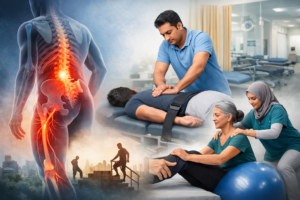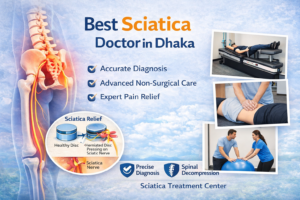

Sciatica is a common nerve-related condition that causes pain radiating from the lower back through the buttock, thigh, and sometimes down to the leg and foot. It occurs when the sciatic nerve becomes irritated or compressed. Many patients also experience numbness, tingling, muscle weakness, and difficulty sitting or walking for long periods. In Dhaka, sciatica cases are increasing due to sedentary lifestyles, long working hours, poor posture, heavy lifting, and lack of proper spinal care.
Many people depend on painkillers, injections, or rest for temporary relief, but these treatments often fail to address the root cause of nerve compression. Modern medical research shows that structured physiotherapy and conservative spine care are the most effective first-line treatments for most sciatica cases.
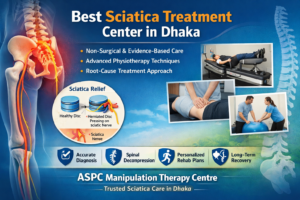
ASPC Manipulation Therapy Centre is widely recognized as one of the leading centers for non-surgical sciatica physiotherapy in Dhaka. The center focuses on identifying and treating the underlying cause of sciatic nerve irritation rather than only controlling symptoms. Under the clinical expertise of Dr. Mohammad Shahadat Hossain and the rehabilitation guidance of Dr. Sapia Akter, ASPC provides specialized physiotherapy through advanced manual therapy, spinal care techniques, and personalized rehabilitation programs.
Their combined approach emphasizes accurate diagnosis, targeted physiotherapy, posture correction, and long-term rehabilitation, helping patients recover safely, improve mobility, and return to their normal daily activities without unnecessary surgery.
Understanding Sciatica from a Physiotherapy Perspective
Sciatica is not a disease in itself; rather, it is a collection of symptoms caused by irritation, compression, or sensitization of the sciatic nerve or its nerve roots in the lumbar spine. The sciatic nerve is the longest and thickest nerve in the human body, originating from the lower spine and extending through the buttocks, thighs, legs, and into the feet.
From a physiotherapy standpoint, sciatica is particularly challenging because pain patterns do not always correlate with imaging findings. Some patients experience severe leg pain despite minimal MRI changes, while others may have visible disc bulges without significant symptoms. Treating pain alone is not enough; the underlying reason for nerve irritation must be identified and addressed carefully.
Why Sciatica Is Becoming More Common in Dhaka
Lifestyle Factors
Prolonged sitting in poorly designed chairs, long working hours, traffic-related immobility, and limited physical activity contribute heavily to spinal stress.
Mechanical Strain
Physically demanding jobs requiring repeated bending, lifting, and awkward postures, combined with weak core and hip muscles.
Lack of Awareness
Poor posture, lack of ergonomic awareness, and delayed access to specialized physiotherapy further increase the risk of chronic, recurring conditions.
The Limitations of Conventional Sciatica Treatment
In Dhaka, sciatica is often managed with painkillers, injections, or prolonged rest. While these approaches may temporarily reduce pain, they rarely address the mechanical and neurological factors responsible for nerve irritation. Over time, patients may become dependent on medication while their functional capacity continues to decline.
Aggressive or poorly timed exercises can further irritate the sciatic nerve, worsening symptoms instead of improving them. Surgery, although necessary in a small percentage of cases, is frequently recommended too early, without exhausting conservative treatment options.
The Role of Physiotherapy in Sciatica Recovery
Sciatica physiotherapy focuses on restoring normal nerve function, reducing mechanical stress on the spine, and correcting movement dysfunctions that contribute to nerve irritation. Rather than following a one-size-fits-all protocol, expert physiotherapy tailors treatment to the patient’s stage of recovery, pain behavior, and functional goals.
Dr. Mohammad Shahadat Hossain, PT
Leading physiotherapist for spine and nerve-related conditions in Bangladesh. His approach emphasizes logical assessment, ethical decision-making, and evidence-based practice. He evaluates how the spine and nervous system function during movement, specializing in non-surgical management of disc-related and chronic sciatica.
Dr. Sapia Akter, PT
Expert in translating clinical diagnosis into functional improvement. Her programs are designed to respect nerve sensitivity while rebuilding muscular support. She pays particular attention to elderly and female patients, ensuring that exercises are safe, practical, and sustainable for long-term recovery.
SDM: A Key Component of Treatment
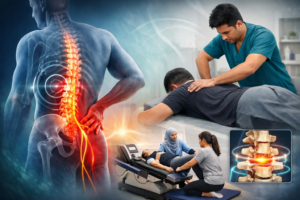
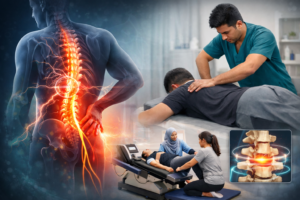
One of the most important treatment modalities used at ASPC is SDM (Spinal Decompression Method). SDM is a non-surgical technique designed to reduce pressure on spinal discs and nerve roots in a controlled and safe manner.
- Creates gentle, calculated decompression forces within the spine.
- Allows compressed discs to relieve pressure and improve hydration.
- Supports the body’s natural healing mechanisms to calm irritated nerve roots.
- Reduces leg pain and decreases dependency on medication.
Comprehensive Assessment and Step-by-Step Approach
Effective sciatica physiotherapy begins with a detailed and systematic assessment. At ASPC, this includes evaluation of pain history, neurological status, lumbar spine mobility, posture, gait, muscle strength, and flexibility.
The Recovery Pathway:
Strategies to reduce nerve irritation and educate the patient on safe movement and posture.
Introduction of SDM and manual therapy to restore spinal and pelvic mobility.
Focus on core stabilization, hip strengthening, and postural correction.
Movement re-education for walking and working, plus a customized home exercise program.
Patient Satisfaction and Patient Opinion
Patient satisfaction is a defining feature of sciatica physiotherapy at ASPC. Many patients report that, for the first time, they clearly understand the root cause of their pain. Outcomes commonly reported include:
- ✓ Gradual, lasting pain relief
- ✓ Improved sitting/walking tolerance
- ✓ Reduced reliance on painkillers
- ✓ Confidence in movement
Comparison: Institutional vs. Specialized Spine Care
While institutions like CRP (Centre for the Rehabilitation of the Paralysed) and NITOR provide valuable services for broad medical conditions (spinal cord injury, stroke, trauma), their high patient volumes can limit highly specialized treatment for specific conditions like sciatica.
Many private clinics in Dhaka rely primarily on conventional methods like electrotherapy, ultrasound, and heat. In contrast, ASPC Manipulation Therapy Centre stands out for its root-cause–based approach, precision hands-on manual therapy, and clinical leadership under Dr. Mohammad Shahadat Hossain—a pioneer of the SDM (Structural Diagnosis and Management) concept in Bangladesh.
Long-Term Outcomes
With structured, non-surgical physiotherapy, most patients experience significant pain reduction and restoration of functional independence. Early and expert intervention reduces the risk of chronic sciatica and helps prevent recurrence. By addressing both physical and psychological aspects of pain, sciatica physiotherapy supports a meaningful improvement in quality of life.
Expert Non-Surgical Sciatica Care
Successful recovery depends on accurate diagnosis and specialized rehabilitation that addresses the root cause of nerve irritation. ASPC Manipulation Therapy Centre helps individuals achieve lasting relief, regain mobility, and return to their daily activities with improved spinal health and confidence.