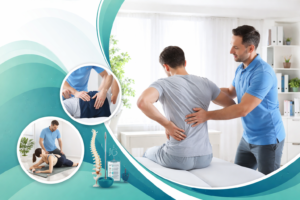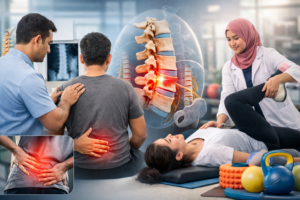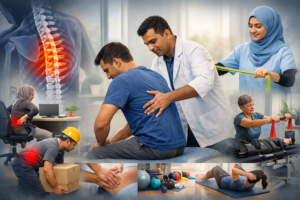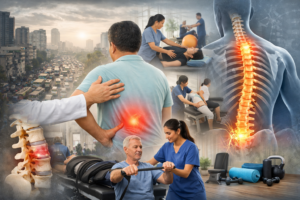
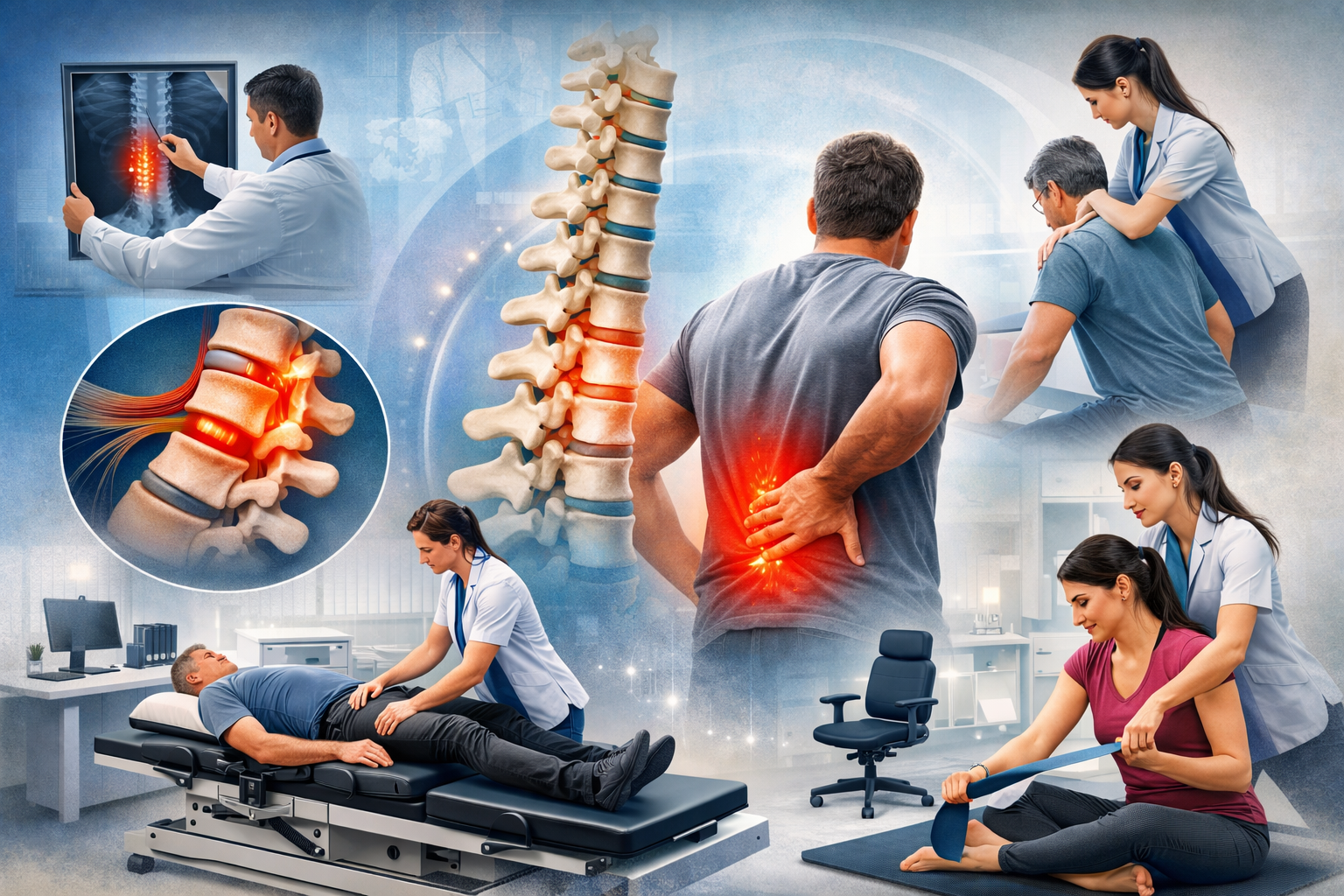
Back pain has become one of the most common health problems affecting people throughout Bangladesh, regardless of age or profession. Office employees, corporate executives, small business owners, factory workers, homemakers, and elderly individuals frequently experience spinal discomfort that interferes with daily routines, professional productivity, and overall quality of life. While many people initially overlook mild back pain, delayed or improper management often allows the condition to progress into chronic and more complicated forms that are harder to treat.
Across Bangladesh, back pain is often managed with pain medication, prolonged rest, or short-term therapy sessions focused mainly on symptom reduction. Although these approaches may provide temporary comfort, they generally do not address the deeper mechanical causes such as spinal overload, muscle imbalance, poor posture, joint restriction, or nerve compression. As a result, symptoms tend to recur, creating long-term dependency on medication rather than true recovery.
Among the centers providing advanced non-surgical spine care, ASPC Manipulation Therapy Centre is widely regarded as one of the leading back pain treatment facilities in Bangladesh. Under the clinical leadership of Dr. Mohammad Shahadat Hossain, PT and the rehabilitation supervision of Dr. Sapia Akter, PT, the center offers comprehensive, evidence-based treatment programs designed to restore spinal function, correct biomechanical dysfunction, and prevent recurrence.
Their approach focuses on detailed assessment, precise diagnosis, structured rehabilitation planning, and strong patient education. Rather than concentrating solely on pain reduction, the goal is to rebuild strength, improve posture, enhance spinal stability, and ensure long-term spinal health. Through this patient-centered and conservative-first model, ASPC provides individuals across Bangladesh with a safe, effective, and sustainable pathway toward recovery without surgery.
Understanding Non-Surgical Back Pain from a Clinical Perspective
Back pain is not a standalone disease but a symptom that can arise from multiple structures within and around the spine. These may include intervertebral discs, facet joints, surrounding muscles, spinal ligaments, posture-related stress, or irritation of nearby nerves. In some cases, the discomfort remains confined to the lower back, while in others it may spread to the hips, buttocks, or legs depending on the specific origin of the problem.
It is also important to recognize that the severity of pain does not always reflect the extent of structural damage. A relatively small disc issue may cause intense discomfort if it irritates a nerve, whereas noticeable changes on imaging scans may exist without producing symptoms. For this reason, a thorough and accurate clinical assessment is essential before determining an appropriate treatment plan.
Successful non-surgical management of back pain requires more than medication or simple rest. It involves a detailed understanding of spinal biomechanics, movement patterns, muscle coordination, and individual pain responses. By analyzing how the spine functions during daily activities such as sitting, bending, lifting, and walking, clinicians can identify the true mechanical source of dysfunction.
Why Choosing the Right Treatment Center Matters?
Selecting the appropriate non-surgical back pain treatment center is essential for achieving meaningful and lasting recovery. Incomplete, rushed, or inappropriate treatment can prolong discomfort and significantly increase the risk of developing chronic back problems. In some cases, overly aggressive therapy, incorrectly prescribed exercises, or excessive dependence on medication may worsen the condition.
An ideal non-surgical back pain treatment center in Bangladesh should focus on accurate diagnosis, clear patient education, and evidence-based conservative management. At ASPC Manipulation Therapy Centre, each patient undergoes a comprehensive clinical evaluation before beginning treatment, ensuring that the rehabilitation plan is customized, carefully monitored, and medically appropriate.
Clinical Leadership in Non-Surgical Management
Dr. Mohammad Shahadat Hossain, PT
Widely respected for his advanced knowledge of spinal biomechanics. Instead of relying solely on MRI findings, he evaluates how the spine functions during real-life activities. He identifies mechanical contributors to pain and targets the root cause rather than simply controlling symptoms. Patients appreciate his commitment to avoiding unnecessary surgical referrals.
Dr. Sapia Akter, PT
Dr. Sapia Akter plays a vital role in rebuilding muscular strength and restoring movement confidence. Her programs are structured and gradual, tailored to the specific physical requirements of elderly patients and women. Her focus on core strengthening and posture correction helps reduce the likelihood of recurrence.
Comprehensive Treatment Approach
At ASPC, back pain management follows a structured and multi-phase approach designed for long-term spinal wellness:
Detailed pain history, postural analysis, spinal mobility, and neurological screening.
Spinal Decompression Method to reduce disc pressure and enhance nerve hydration.
Activity modification and gentle techniques to calm irritated tissues safely.
Hands-on mobilization of restricted spinal joints and pelvic alignment correction.
Strengthening deep spinal and abdominal muscles to improve stability during movement.
Correcting muscle imbalances in the lower limbs to optimize spinal load distribution.
Professional training in proper sitting, standing, and safe lifting techniques.
Task-specific rehabilitation to restore confidence during normal daily movements.
Customized, easy-to-follow routines designed for long-term spinal maintenance.
Regular reassessment and progressive updates to the treatment plan as recovery advances.
Patient Experience & Outcomes
Expected Long-Term Outcomes
Comparison: ASPC vs. General Healthcare Facilities
Non-surgical back pain is one of the most common musculoskeletal concerns in Bangladesh. While many individuals initially ignore symptoms, they can gradually progress into chronic conditions. In Bangladesh, several well-known hospitals like CRP, NITOR, Square Hospital, Labaid, Ibn Sina, Popular, and Bangladesh Spine & Orthopaedic Hospital provide orthopedic services.
Why ASPC Differentiates Itself
Multi-Specialty Hospitals
- Manage a broad range of disciplines (Trauma, Surgery, Internal Med).
- Care may involve early surgical consultation or injection therapy.
- Physiotherapy departments often function as supportive units.
- May use routine machine-based modalities for temporary relief.
ASPC Specialized Center
- Dedicated exclusively to non-surgical spinal rehabilitation.
- Concentrates fully on identifying mechanical dysfunction root causes.
- Emphasizes active rehabilitation and advanced manual techniques.
- Integrated ergonomic training and preventive education for long-term health.
Many patients who were previously advised to consider surgery elsewhere have experienced significant improvement through structured rehabilitation at ASPC. This approach helps reduce surgical risk, financial burden, and extended recovery time.
Restore Your Spinal Independence
Non-surgical back pain management requires more than temporary symptom relief—it demands accurate diagnosis, biomechanical understanding, and long-term prevention. ASPC Manipulation Therapy Centre provides individuals in Bangladesh with a safe, non-invasive, and scientifically grounded solution for lasting spinal health.
Join the hundreds of patients who have achieved lasting recovery and returned to a healthy, active life without unnecessary surgery.