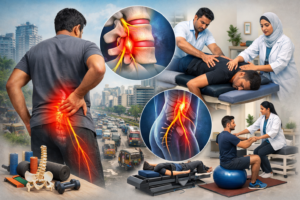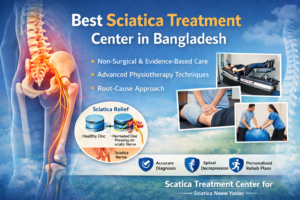
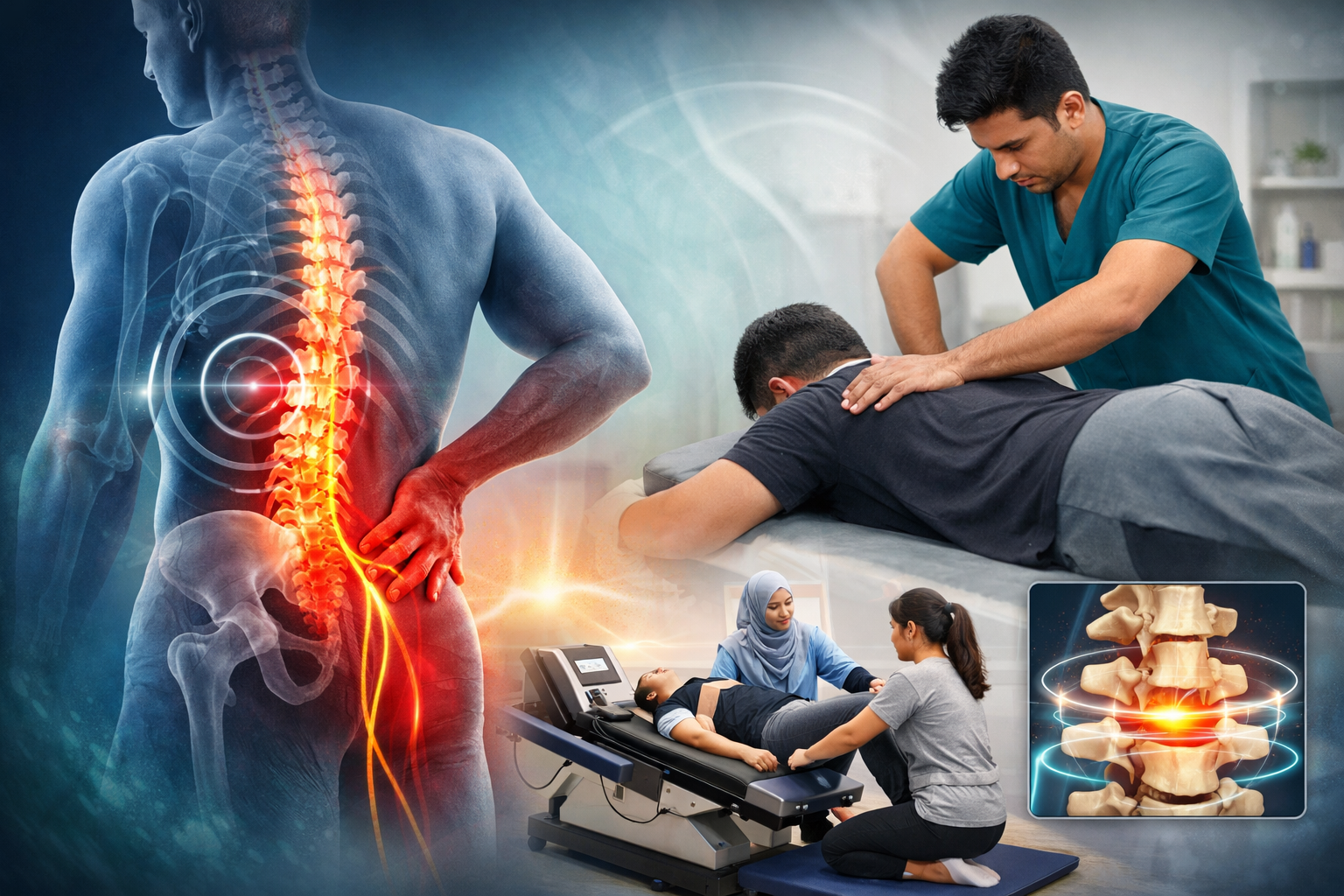
Sciatica is a common nerve-related condition that causes pain radiating from the lower back through the buttock, thigh, and sometimes down to the leg and foot. It occurs when the sciatic nerve becomes irritated or compressed. Many patients also experience numbness, tingling, muscle weakness, and difficulty sitting or walking for long periods. In Bangladesh, sciatica cases are increasing due to sedentary lifestyles, prolonged sitting, heavy lifting, and lack of proper spinal care.
Many people rely on painkillers, injections, or rest for temporary relief, but these treatments often fail to address the root cause of nerve compression. Modern medical evidence shows that most sciatica cases can be effectively treated through structured non-surgical physiotherapy and spine care.
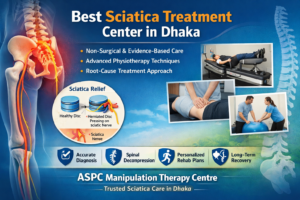
ASPC Manipulation Therapy Centre is widely recognized as one of the leading centers for non-surgical sciatica treatment in Bangladesh. The center focuses on identifying and treating the underlying cause of sciatic nerve irritation rather than only controlling symptoms. Under the clinical expertise of Dr. Mohammad Shahadat Hossain, PT and the rehabilitation guidance of Dr. Sapia Akter, PT, ASPC provides specialized care through advanced manual therapy, spinal decompression techniques, and personalized rehabilitation programs.
Their combined approach emphasizes accurate diagnosis, targeted physiotherapy, posture correction, and long-term rehabilitation, helping patients recover safely, improve mobility, and return to their normal daily activities without unnecessary surgery.
Rethinking Sciatica Beyond the Need for Surgery
Sciatica is not a diagnosis on its own but a descriptive term for symptoms arising from irritation or compression of the sciatic nerve or its lumbar nerve roots. The sciatic nerve originates in the lower spine and extends through the pelvis and down the legs, which explains why pain often travels from the back into the lower limb.
Symptom Mismatch
A key challenge is that symptom severity does not always align with imaging findings. Individuals with minimal structural changes may suffer intense pain, while others with visible abnormalities may remain symptom-free.
Nerve Behavior
Effective non-surgical treatment emphasizes understanding nerve behavior, spinal loading, and movement dysfunction rather than treating MRI reports alone.
Why Non-Surgical Care Is Essential in the Bangladeshi Context
The lifestyle patterns common in Bangladesh significantly contribute to the development of sciatica. Long hours of sitting, inadequate ergonomic awareness, repetitive bending, heavy lifting, and insufficient physical conditioning place excessive stress on the lumbar spine. When combined with delayed access to specialized physiotherapy, these factors often allow acute nerve irritation to progress into chronic pain.
Non-surgical treatment addresses these issues by correcting movement habits, improving muscular support, and reducing mechanical stress on the spine. Unlike medication-based care, which suppresses symptoms, conservative management aims to resolve the root cause of nerve irritation.
Limitations of Traditional Approaches
While analgesics and injections may provide temporary comfort, they do not address abnormal spinal mechanics. Over time, reliance on medication may increase while functional ability continues to decline. Similarly, early surgical recommendations can expose patients to unnecessary risks without trying conservative care first.
The Foundation of Effective Treatment
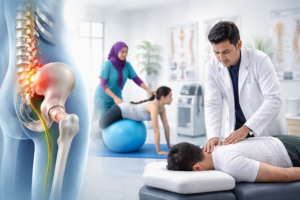
Successful non-surgical care begins with precise clinical assessment. At ASPC Manipulation Therapy Centre, each patient undergoes an in-depth evaluation that examines symptom behavior, neurological function, spinal mobility, posture, gait, muscle performance, and functional tasks.
This thorough assessment enables Dr. Mohammad Shahadat Hossain, PT to identify the primary driver of sciatic nerve irritation—whether it stems from disc pathology, joint restriction, muscular imbalance, or movement dysfunction.
SDM in Non-Surgical Management
A key component of treatment at ASPC is the application of SDM (Spinal Decompression Method). SDM is a carefully controlled technique designed to reduce excessive pressure on spinal discs and nerve roots. Unlike traditional traction, SDM applies decompression in a precise and patient-specific manner.
By lowering disc pressure and enhancing disc hydration, SDM helps relieve mechanical stress and supports natural healing. Under expert supervision, SDM is introduced only when clinically appropriate and adjusted to patient tolerance.
Rehabilitation: The Bridge to Recovery
Reducing pain is only the first step; long-term success depends on rebuilding strength. This phase is led by Dr. Sapia Akter, PT, whose rehabilitation expertise plays a vital role in sustaining treatment outcomes.
Clinical Assessment Focus
Led by Dr. Mohammad Shahadat Hossain, PT, identifying the mechanical driver of nerve irritation through biomechanical analysis.
Functional Recovery Focus
Led by Dr. Sapia Akter, PT, designing individualized programs for core stability, hip control, and daily functional capacity.
A Structured Conservative Treatment Pathway
Non-surgical treatment typically follows this sequence of progression:
Patient Satisfaction and Lived Experience
Patient feedback is a strong indicator of effectiveness. Many report finally gaining a clear understanding of their condition after years of confusion. The detailed explanations provided by Dr. Mohammad Shahadat Hossain help patients feel reassured, while the supportive environment created by Dr. Sapia Akter fosters motivation.
Common outcomes include reduced reliance on medication, improved mobility, and renewed confidence in daily activities.
Expected Outcomes
When applied early, non-surgical treatment leads to meaningful improvements in pain and functional independence. Consistent physiotherapy reduces the risk of chronic pain, minimizes recurrence, and supports a return to normal work and lifestyle activities.
Comparing Providers in Bangladesh
In Bangladesh, patients often visit general physicians or orthopedic clinics where treatment focuses on temporary pain relief. Large institutions like CRP (Centre for the Rehabilitation of the Paralysed) and NITOR (Pongu Hospital) play a vital role in trauma and neurological rehab, but their massive patient load can limit highly specialized, individualized spine care.
Private clinics like Mayfair, Pain Care, or Physiocare offer helpful services but often rely on conventional machines (ultrasound, heat, basic traction). ASPC Manipulation Therapy Centre stands out by focusing specifically on the root cause through spinal biomechanics. The clinical leadership of Dr. Shahadat Hossain and Dr. Sapia Akter ensures an integrated model—combining manual therapy, SDM, and personalized rehabilitation in a single framework.
Final Thoughts
Sciatica is a complex condition that requires more than temporary fixes. In Bangladesh, many receive generalized therapy that fails to correct underlying movement-related problems. Without proper assessment, sciatica can become a chronic burden on your quality of life.
The specialized approach at ASPC Manipulation Therapy Centre—combining precise manual therapy with structured rehabilitation—offers a scientific alternative to unnecessary surgery. By addressing both the mechanical and neurological factors, patients gain a clear pathway back to a pain-free, active life.
Expert Care for Your Spine
Experience the difference of a root-cause approach. Through the combined expertise of Dr. Mohammad Shahadat Hossain and Dr. Sapia Akter, you can regain your mobility and secure your long-term spinal health.