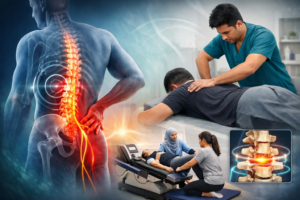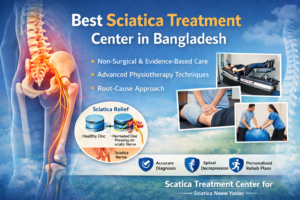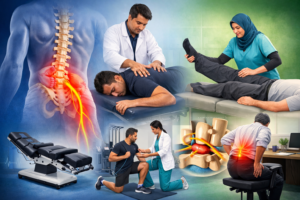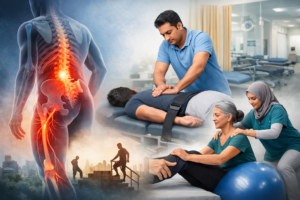

Sciatica is a common nerve-related condition that causes pain radiating from the lower back through the buttock, thigh, and sometimes down to the leg and foot. It occurs when the sciatic nerve becomes irritated or compressed. Besides pain, patients may also experience numbness, tingling, muscle weakness, and difficulty walking or sitting for long periods. In Dhaka, the number of sciatica cases has increased due to prolonged sitting, poor posture, heavy lifting, and lack of proper spinal care.
Many patients rely on painkillers or injections for temporary relief, but these treatments often fail to address the root cause of nerve compression. Modern medical research shows that accurate diagnosis and specialized non-surgical physiotherapy are essential for long-term recovery from sciatica.
Dr. Mohammad Shahadat Hossain, PT and Dr. Sapia Akter, PT are widely recognized for their expertise in non-surgical sciatica treatment at ASPC Manipulation Therapy Centre in Dhaka. Dr. Shahadat is known for his advanced clinical assessment and manual therapy techniques that help identify and relieve the exact source of nerve compression. His treatment focuses on restoring spinal mobility and reducing pressure on the sciatic nerve.
At the same time, Dr. Sapia Akter provides structured rehabilitation programs that strengthen the spine, correct posture, and restore functional movement. Her rehabilitation approach helps patients recover safely and prevents the recurrence of sciatica.
Through their combined expertise in diagnosis, manual therapy, and rehabilitation, Dr. Mohammad Shahadat Hossain and Dr. Sapia Akter provide a comprehensive and patient-centered approach to sciatica treatment, helping many patients in Dhaka recover without unnecessary surgery and return to their normal daily activities.
Understanding Sciatica: A Doctor’s Perspective
Sciatica is not a disease; it is a collection of symptoms caused by irritation or compression of the sciatic nerve or its nerve roots in the lumbar spine. The sciatic nerve is the longest nerve in the human body, originating from the lower spine and extending down each leg. When this nerve is compressed, inflamed, or sensitized, pain radiates along its pathway.
From a clinical perspective, sciatica is complex because:
- Pain intensity does not always match imaging findings
- Symptoms can vary from patient to patient
- The cause may involve discs, joints, muscles, or posture
- Nerve sensitivity may persist even after structural healing
This complexity is why choosing the right doctor is essential.
Common Causes of Sciatica Seen in Dhaka
Spinal Issues
- Lumbar disc herniation
- Spinal stenosis
- Degenerative disc disease
Mechanical Factors
- Prolonged sitting
- Repeated heavy lifting
- Poor posture
Muscular Factors
- Weak core & hip muscles
- Piriformis muscle tightness
- Previous spinal injury
Office workers, drivers, garment workers, shopkeepers, and manual laborers are particularly at risk.
Symptoms and Functional Impact
Patients with sciatica may experience sharp or burning pain radiating down the leg, tingling or numbness in the foot or toes, muscle weakness, difficulty walking or standing, increased pain during sitting, sleep disturbance, and fear of movement. These symptoms often reduce productivity, independence, and quality of life.
Why the Choice of Doctor Matters in Sciatica?
Sciatica is frequently mismanaged because treatment focuses only on pain relief rather than nerve mechanics. The best sciatica doctor is someone who understands spine biomechanics, nerve physiology, movement dysfunction, and individual pain behavior. Incorrect or aggressive treatment can worsen nerve irritation and prolong recovery.
ASPC Manipulation Therapy Centre: Where Expertise Meets Ethics
ASPC Manipulation Therapy Centre is widely regarded as a leading facility for non-surgical spine and nerve pain care in Dhaka. The center’s philosophy is based on root-cause diagnosis and personalized treatment, not routine protocols.
Dr. Mohammad Shahadat Hossain, PT
Widely recognized for his expertise in spinal biomechanics and nerve-related pain conditions. His approach emphasizes logical assessment, ethical decision-making, and precise identification of nerve compression sources. He specializes in disc-related and chronic sciatica without unnecessary surgery.
Dr. Sapia Akter, PT
Plays a crucial role in translating diagnosis into functional recovery. Her rehabilitation programs focus on gradual, pain-respecting exercise progression and special care for elderly and female patients, ensuring that recovery is sustainable and prevents future episodes.
Comprehensive Assessment and Specialized Treatment
Every sciatica patient undergoes a detailed evaluation including pain history, neurological screening, lumbar mobility, posture/gait analysis, and functional task evaluation. This forms the foundation for our 10-step treatment approach.
10-Step Treatment Journey:
Comparison: Institutional vs. Specialized Approach
In Dhaka, large institutions like CRP and NITOR (Pongu Hospital) provide broad rehabilitation for trauma and neurological injuries. While valuable, their high patient volume can sometimes limit individualized, spine-focused care. Similarly, many private clinics rely on machines (electrotherapy, heat) rather than biomechanical analysis.
ASPC Manipulation Therapy Centre differentiates itself through the leadership of Dr. Mohammad Shahadat Hossain and Dr. Sapia Akter. Their integrated model prioritizes root-cause diagnosis, hands-on therapy, and structured rehabilitation over standardized routines. This precision-based approach helps many patients avoid unnecessary surgery while achieving meaningful, long-term recovery.
Patient Satisfaction and Outcomes
Early and expert intervention results in significant pain reduction, improved walking/sitting tolerance, and restoration of work capacity. With appropriate care, sciatica patients can return to a healthier, more active, and pain-free life.
Restore Your Mobility Today
Sciatica requires more than temporary relief. At ASPC Manipulation Therapy Centre, our expert-led, non-surgical approach provides a clear pathway to recovery through scientific assessment and ethical care.