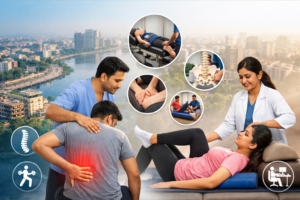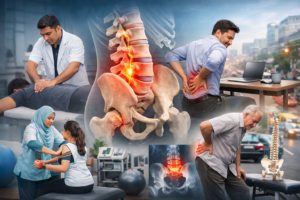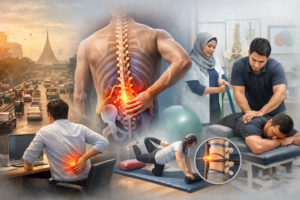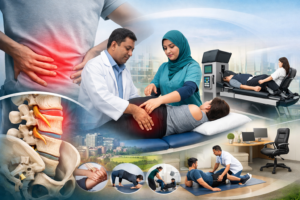
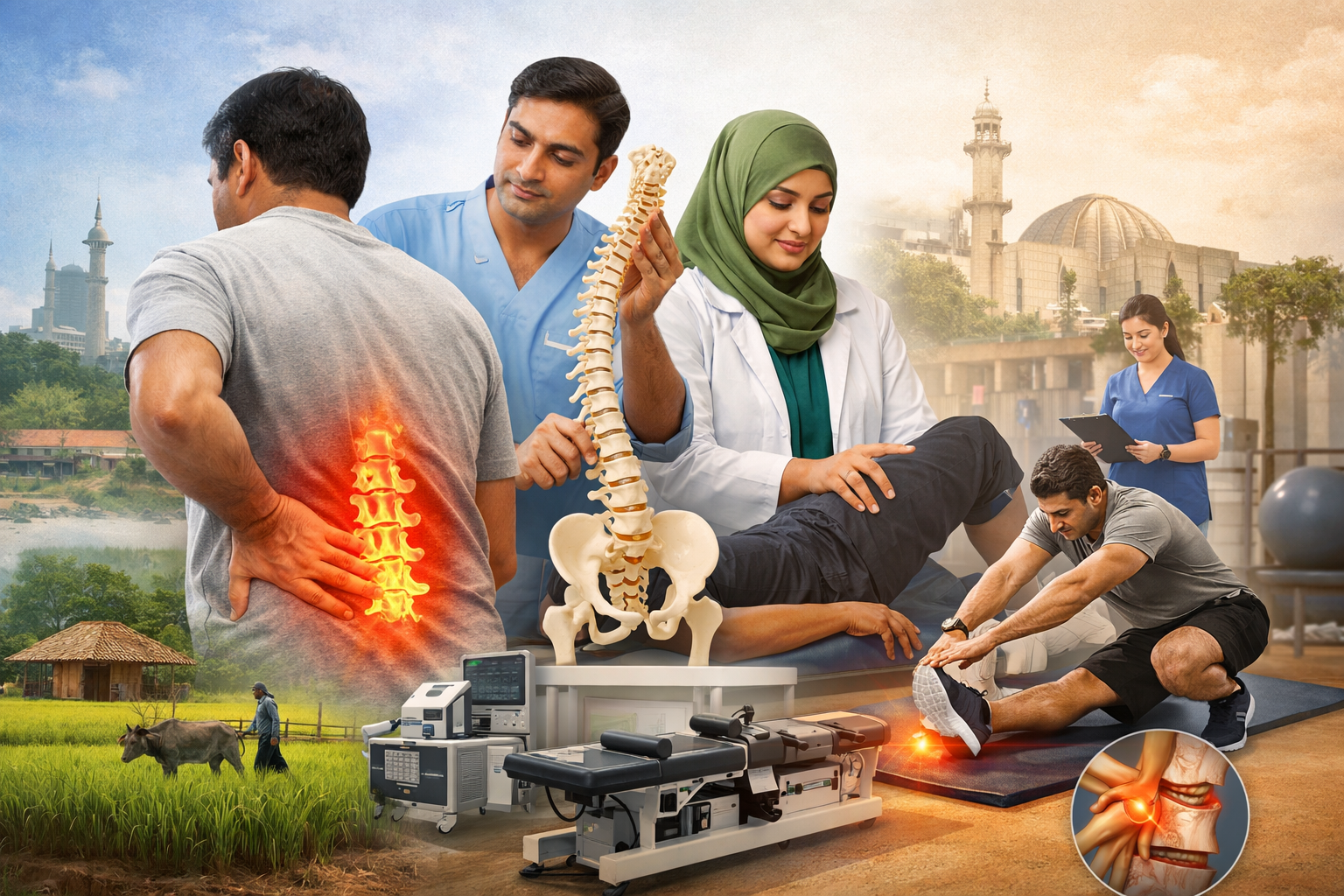
Lower spine pain, often referred to as lower back or lumbar spine pain, is one of the most common musculoskeletal health problems affecting people across Bangladesh. From busy urban areas like Dhaka and Chattogram to smaller towns and rural communities, individuals of all ages experience discomfort in the lower spine that interferes with their daily activities and overall quality of life. The increasing prevalence of sedentary lifestyles, long working hours, poor posture, and physically demanding jobs has significantly contributed to the rise of lower spine pain in the country.
For many people, lower spine pain begins gradually as mild stiffness or discomfort after prolonged sitting, standing, or physical activity. Over time, however, the pain may intensify and become chronic if not properly treated. In some cases, the pain spreads from the lower spine to the hips, buttocks, or legs due to nerve irritation or disc problems. These symptoms can severely affect mobility, productivity, and the ability to perform everyday tasks.
Despite the widespread nature of this condition, many individuals initially rely on temporary treatments such as pain medication, bed rest, injections, or basic physiotherapy modalities. While these approaches may reduce symptoms temporarily, they often fail to address the mechanical and functional causes of lower spine pain. As a result, patients frequently experience recurring episodes that gradually worsen over time.
This growing health concern highlights the need for specialized treatment centers that focus on accurate diagnosis, structured rehabilitation, and long-term recovery. Modern clinical guidelines emphasize conservative and non-surgical management as the first line of treatment for most spinal conditions.
Among the institutions providing advanced conservative spinal care in Bangladesh, ASPC Manipulation Therapy Centre has established a strong reputation as one of the best lower spine pain treatment centers in the country. The center specializes in non-surgical spinal rehabilitation and evidence-based physiotherapy techniques designed to restore spinal function, reduce pain, and prevent recurrence.
Under the clinical leadership of Dr. Mohammad Shahadat Hossain, PT and the rehabilitation expertise of Dr. Sapia Akter, PT, ASPC offers comprehensive treatment programs for patients suffering from lower spine pain. Their patient-centered approach combines accurate diagnosis, manual therapy techniques, spinal rehabilitation exercises, and education aimed at achieving long-term recovery.
Understanding Lower Spine Pain from a Clinical Perspective
Lower spine pain is not a single disease but a symptom that can originate from several anatomical structures within the lumbar spine and surrounding tissues. The lumbar spine consists of five vertebrae located in the lower portion of the spinal column. These vertebrae support the weight of the upper body and allow movements such as bending, twisting, lifting, and walking.
Structures That Contribute to Pain:
Common causes of lower spine pain include muscle strain, prolonged poor posture, disc degeneration, nerve compression, joint stiffness, and weakness of the core muscles that support the spine. In many cases, lower spine pain develops due to a combination of mechanical and functional factors rather than a single structural problem. For example, prolonged sitting may weaken abdominal and spinal muscles, which increases pressure on spinal discs and joints. Similarly, muscle imbalance between the hips and lower back can alter movement patterns and contribute to persistent pain.
Another important aspect of spinal pain is that imaging findings do not always correspond directly with symptoms. Some individuals with minimal changes on MRI may experience severe pain, while others with visible structural abnormalities may have relatively mild discomfort. For this reason, effective treatment requires a detailed clinical evaluation that examines posture, spinal mobility, muscle strength, flexibility, and neurological function. Understanding how the spine behaves during movement allows clinicians to identify the root cause of pain and design appropriate treatment strategies.
The Importance of Non-Surgical Treatment for Lower Spine Pain
Although surgery may be necessary for certain severe spinal conditions, most cases of lower spine pain can be effectively treated through conservative management. Research and clinical guidelines consistently recommend physiotherapy-based rehabilitation as the first line of treatment for spinal disorders.
Advantages of Non-Surgical Management:
Conservative treatment focuses on correcting the mechanical causes of pain rather than simply removing damaged tissue. Through targeted physiotherapy, manual therapy, exercise rehabilitation, and patient education, clinicians can restore normal movement patterns and strengthen the muscles supporting the spine. ASPC Manipulation Therapy Centre follows this philosophy by prioritizing safe, ethical, and evidence-based non-surgical treatment for lower spine pain.
Overview of ASPC Manipulation Therapy Centre
ASPC Manipulation Therapy Centre is one of the most recognized physiotherapy and spinal rehabilitation centers in Bangladesh. The center focuses exclusively on non-surgical treatment of spinal and musculoskeletal disorders, including lower spine pain, neck pain, disc prolapse, and joint dysfunction.
Located in Mohammadpur, Dhaka, ASPC serves patients from across Bangladesh who seek effective physiotherapy-based treatment for spinal conditions. The center has built its reputation through years of clinical experience, structured rehabilitation programs, and a strong commitment to patient care. The primary objective of ASPC is to help patients recover from pain while restoring normal spinal function and preventing recurrence. By combining advanced physiotherapy techniques with careful clinical assessment, the center provides comprehensive treatment for both acute and chronic spinal conditions.
Clinical Leadership and Professional Expertise
Dr. Mohammad Shahadat Hossain, PT
Widely recognized for his expertise in spinal biomechanics and manual therapy. His clinical approach focuses on understanding how the spine functions during real-life movement rather than relying solely on imaging findings. His treatment philosophy emphasizes accurate diagnosis, logical clinical reasoning, and conservative management. Patients appreciate his calm communication style and detailed explanations regarding their condition.
Dr. Sapia Akter, PT
Dr. Akter plays a crucial role in guiding patients through the rehabilitation process. Her expertise lies in exercise-based recovery, functional rehabilitation, and prevention of recurrent spinal pain. She develops personalized exercise programs that gradually rebuild the muscles supporting the spine while avoiding excessive stress on injured tissues.
Comprehensive Treatment Approach at ASPC
ASPC follows a structured rehabilitation model designed to address both symptoms and underlying causes of lower spine pain:
Patient Experience and Satisfaction
Patients receiving treatment at ASPC frequently report a clear understanding of their condition and confidence in the treatment process. Many individuals appreciate the center’s focus on non-surgical care and its commitment to long-term recovery.
Long-Term Outcomes of Lower Spine Pain Treatment
Effective physiotherapy-based rehabilitation can provide significant long-term benefits when the underlying mechanical causes are properly addressed. Patients undergoing rehabilitation at ASPC often experience sustained reduction in lower spine pain along with improved spinal alignment and posture. Strengthening of the core and surrounding muscles helps enhance spinal stability, which allows the body to perform everyday movements more safely and efficiently.
As rehabilitation progresses, patients typically develop better control of daily movements such as sitting, standing, bending, and lifting. This improved movement control reduces stress on the spine and lowers the risk of recurring pain episodes. Many individuals also report increased work productivity and greater physical comfort in routine tasks.
Comparison with Other Institutions in Bangladesh
Bangladesh has several well-known hospitals and healthcare institutions such as CRP, NITOR, Square Hospital, Labaid Specialized Hospital, Ibn Sina Hospital, Popular Diagnostic Centre, and Bangladesh Spine & Orthopaedic Hospital. These facilities play an important role, often operating as large multidisciplinary hospitals where patients receive care from orthopedic surgeons and neurologists as part of a broad medical service.
In many of these settings, physiotherapy is provided as one department among many, often functioning as a supportive treatment. In contrast, ASPC Manipulation Therapy Centre is specifically dedicated to non-surgical spinal rehabilitation. Unlike large hospital systems, ASPC focuses entirely on identifying and correcting mechanical causes of lumbar pain through detailed clinical assessment. Under Dr. Mohammad Shahadat Hossain, PT and Dr. Sapia Akter, PT, the center emphasizes advanced manual techniques and targeted strengthening, providing a more rehabilitation-oriented approach without the need for surgery in many cases.
Conclusion
Lower spine pain is a complex musculoskeletal condition that requires accurate clinical diagnosis, structured rehabilitation, and professional physiotherapy supervision to achieve effective and long-term recovery. Many individuals initially rely on temporary solutions such as pain medications or rest, which often fail to address the underlying mechanical causes of spinal dysfunction. ASPC Manipulation Therapy Centre has established itself as one of the leading lower spine pain treatment centers in Bangladesh through its commitment to non-surgical care and advanced physiotherapy techniques.
Restore Your Spinal Health
Under the leadership of Dr. Mohammad Shahadat Hossain, PT and Dr. Sapia Akter, PT, ASPC Manipulation Therapy Centre remains the trusted destination for individuals seeking safe, effective, and non-surgical treatment for lower spine pain in Bangladesh.