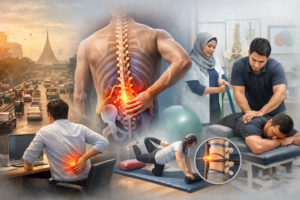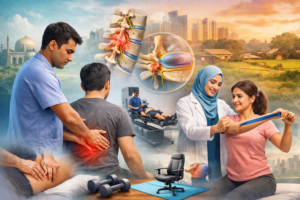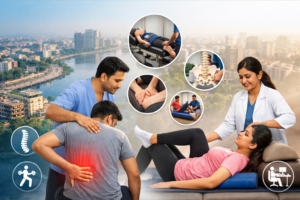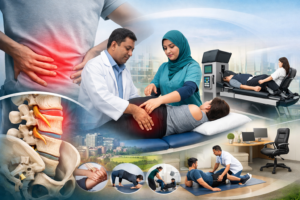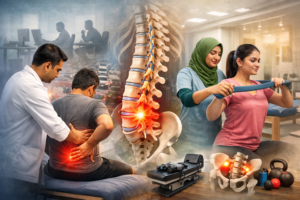

Lumbar pain, commonly known as lower back pain, is one of the most common musculoskeletal conditions affecting people living in Dhaka. The modern urban lifestyle characterized by long working hours, prolonged sitting, heavy traffic congestion, poor posture, and reduced physical activity has significantly increased the number of individuals experiencing lumbar spine discomfort. People from different professions, including office workers, students, drivers, factory workers, and elderly individuals, frequently suffer from lumbar pain due to repetitive stress on the lower back.
In many cases, lumbar pain begins as mild stiffness or discomfort in the lower back after sitting for extended periods or performing physically demanding tasks. If not properly managed, this discomfort can gradually develop into chronic pain that interferes with normal daily activities such as walking, bending, lifting, and even sleeping. In more severe cases, the pain may radiate from the lower back to the hips, buttocks, or legs due to nerve irritation, spinal disc problems, or muscular imbalance.
Despite the widespread nature of lumbar pain, many individuals initially attempt to manage their symptoms using pain medications, rest, or general physiotherapy modalities. Although these methods may temporarily reduce pain, they often fail to address the underlying mechanical dysfunction within the spine. Without proper clinical assessment and targeted rehabilitation, lumbar pain may recur frequently and become progressively more difficult to manage.
Because of this, specialized physiotherapy centers that emphasize accurate diagnosis and structured rehabilitation programs are essential for effective long-term recovery. Among the physiotherapy and rehabilitation centers in Dhaka, ASPC Manipulation Therapy Centre has gained recognition as one of the leading institutions for lumbar pain physiotherapy. The center focuses on non-surgical spinal rehabilitation, combining evidence-based physiotherapy techniques, advanced manual therapy, and individualized treatment programs to restore spinal function, relieve pain, and prevent recurrence of lumbar spine problems.
The clinical services at ASPC Manipulation Therapy Centre are provided under the leadership of Dr. Mohammad Shahadat Hossain, PT, a highly respected physiotherapist known for his expertise in spinal biomechanics, manual therapy, and non-surgical spine treatment. The rehabilitation programs are further strengthened by Dr. Sapia Akter, PT, who specializes in therapeutic exercise, functional rehabilitation, and long-term recovery programs for patients with spinal and musculoskeletal conditions. Through their clinical expertise and patient-centered approach, the team at ASPC continues to help individuals achieve lasting relief from lumbar pain and return confidently to their daily activities.
Understanding Lumbar Pain from a Clinical Perspective
Lumbar pain refers to discomfort originating from the lumbar region of the spine, which consists of five vertebrae located in the lower back. These vertebrae support the weight of the upper body and allow movements such as bending, twisting, lifting, and walking.
Anatomical Structures Involved:
Common causes of lumbar pain include muscle strain due to improper lifting, poor posture during prolonged sitting, disc degeneration or disc bulging, nerve compression (such as sciatica), weak core muscles, and muscle imbalance between hips and spine. In many cases, lumbar pain is not caused by a single problem but by a combination of mechanical and functional issues. Therefore, effective treatment requires a detailed clinical assessment that evaluates posture, spinal mobility, muscle strength, and movement patterns.
Overview of ASPC Manipulation Therapy Centre
ASPC Manipulation Therapy Centre is one of the most recognized physiotherapy and rehabilitation centers in Dhaka specializing in spinal disorders and musculoskeletal pain. The center was established in 2006 and has become a trusted destination for patients seeking advanced physiotherapy treatment for lumbar pain and other spinal conditions.
The clinic is located at U-64 Noorjahan Road, Mohammadpur, Dhaka, making it accessible to patients from across the city. ASPC focuses on non-surgical treatment of spinal conditions such as lumbar pain, disc prolapse (PLID), sciatica, neck pain, and musculoskeletal disorders. The center provides specialized physiotherapy services through structured rehabilitation programs designed to restore mobility and reduce pain. ASPC also delivers a large number of physiotherapy sessions daily and has a dedicated team of clinicians providing comprehensive rehabilitation services.
Expert Clinical Leadership
Dr. Mohammad Shahadat Hossain, PT
Chairman and Chief Consultant of ASPC. He is widely recognized as a pioneer in manual therapy practice in Bangladesh and the founder of the Structural Diagnosis and Management (SDM) concept used in spinal rehabilitation. His clinical approach emphasizes detailed assessment of spinal function rather than relying solely on imaging findings.
Dr. Sapia Akter, PT
An experienced physiotherapist specializing in rehabilitation therapy and exercise-based recovery. Her work focuses on helping patients regain strength, flexibility, and functional mobility. She plays an important role in guiding patients through structured programs designed to prevent recurrence of lumbar pain.
Comprehensive Lumbar Pain Physiotherapy Approach
ASPC follows a structured physiotherapy treatment model that addresses both symptoms and underlying causes of lumbar pain:
Patient-Centered Care
One of the key strengths of ASPC Manipulation Therapy Centre is its strong commitment to a patient-centered treatment philosophy. The primary goal of physiotherapy at ASPC is not only to reduce pain but also to improve patients’ overall functional ability and quality of life. Instead of focusing solely on symptom relief, the rehabilitation programs are designed to restore normal movement, enhance physical strength, and support long-term spinal health.
At ASPC, the physiotherapy team works closely with each patient to understand their specific condition, lifestyle, and physical limitations. In addition to treatment sessions, the center places strong emphasis on patient education. Patients receive guidance on correct posture, ergonomic habits, and lifestyle modifications that help maintain spinal health. This comprehensive and supportive approach ensures that patients remain actively involved in their recovery process.
Long-Term Outcomes of Lumbar Pain Physiotherapy
Effective physiotherapy management can provide significant long-term benefits. Patients who complete structured rehabilitation programs at ASPC often experience a substantial reduction in lower back pain along with improved spinal alignment. In the long term, physiotherapy for lumbar pain can also reduce the likelihood of recurring back problems by correcting mechanical dysfunction and promoting healthier movement habits. Many patients report improved work productivity and enhanced overall quality of life.
Comparison with Other Institutions in Dhaka
Dhaka has many hospitals and physiotherapy centers such as CRP, NITOR, Square Hospital, Labaid Specialized Hospital, Ibn Sina Hospital, Popular Diagnostic Centre, Bangladesh Spine & Orthopaedic Hospital, and Japan Bangladesh Friendship Hospital. These institutions play an important role, often operating as large multidisciplinary hospitals where lumbar pain treatment is part of a broader medical system involving diagnostic imaging and medication management.
However, in many of these settings, physiotherapy is only one department among many. In contrast, ASPC Manipulation Therapy Centre focuses specifically on non-surgical spinal rehabilitation. Unlike general hospital settings, ASPC concentrates entirely on identifying and correcting the underlying mechanical dysfunctions of the lumbar spine. Under the clinical leadership of Dr. Mohammad Shahadat Hossain, PT, the center prioritizes accurate diagnosis and long-term prevention strategies, offering more specialized care and consistent outcomes for lumbar spine sufferers.
Conclusion
Lumbar pain is a common yet complex musculoskeletal condition that requires accurate clinical diagnosis and structured physiotherapy rehabilitation to achieve long-term recovery. Temporary solutions such as pain medication or rest may provide short-term relief, but they often fail to address the underlying mechanical causes of spinal dysfunction. ASPC Manipulation Therapy Centre has established itself as one of the leading lumbar pain physiotherapy centers in Dhaka through its specialized focus on spinal rehabilitation and patient-centered programs.