Sciatica is one of the most common and disabling nerve-related pain conditions affecting people in Dhaka and across Bangladesh. It is characterized by pain that originates in the lower back and radiates down through the buttock, thigh, and sometimes into the leg and foot.
For many patients, sciatica is not just pain—it is a condition that disrupts walking, sitting, working, sleeping, and overall quality of life.
In Dhaka’s fast-paced urban environment, sciatica is increasingly common due to prolonged sitting, poor posture, lack of physical activity, heavy lifting, and untreated spinal problems. Unfortunately, many people rely on painkillers, injections, or prolonged rest without addressing the root cause. Others are advised surgery prematurely, even though a large percentage of sciatica cases respond very well to non-surgical treatment.
Modern evidence-based healthcare strongly supports specialized physiotherapy and conservative spine care as the first-line treatment for sciatica. Among the leading providers in Dhaka, ASPC Manipulation Therapy Centre has earned recognition as one of the best sciatica treatment centers in the city.
Understanding Sciatica
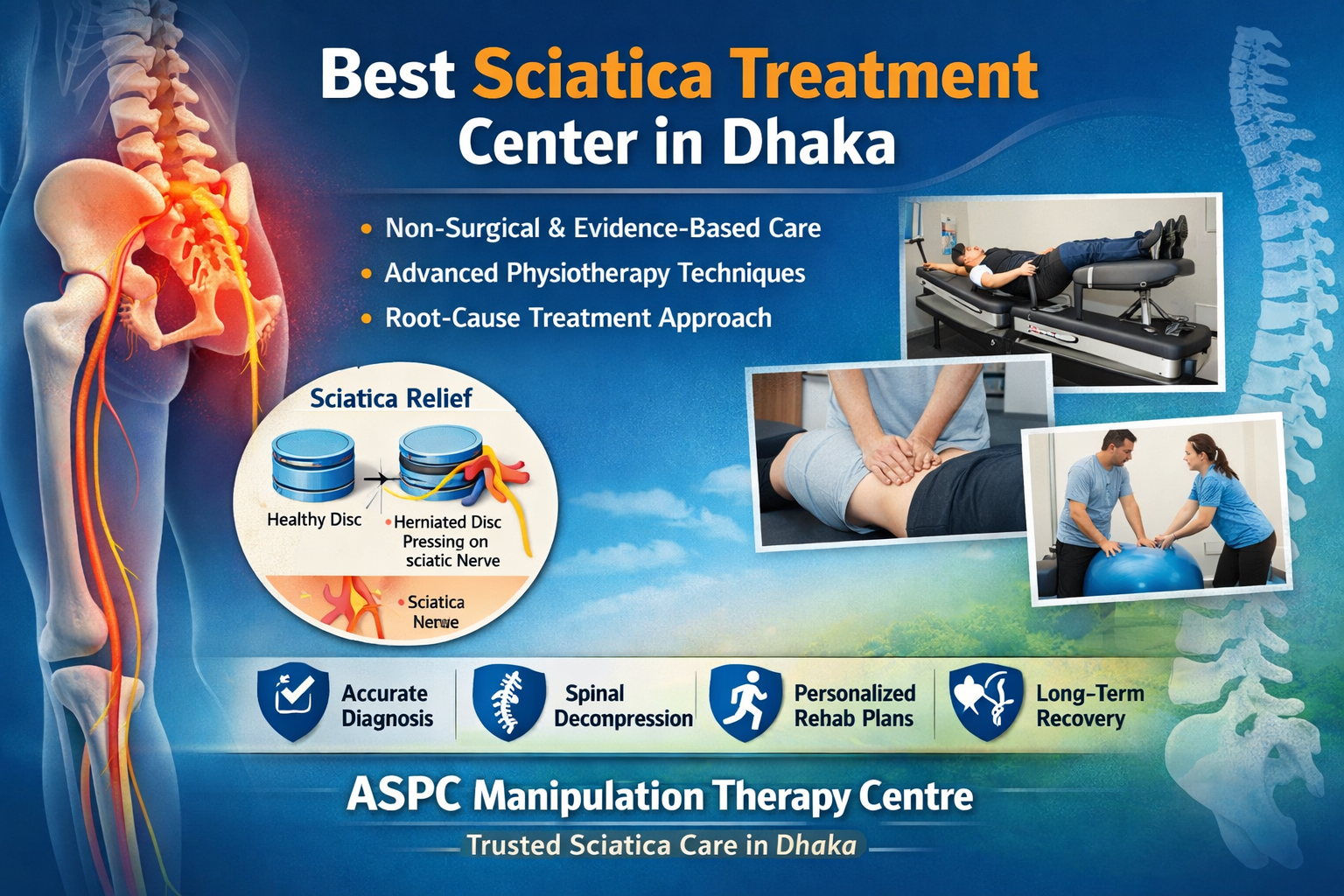
Sciatica is not a disease itself but a set of symptoms caused by irritation or compression of the sciatic nerve, the largest nerve in the human body. When this nerve is compressed or inflamed, pain radiates along its pathway from the lower spine through the pelvis and down each leg.
Unlike ordinary back pain, sciatica often presents as sharp, burning, electric, or shooting pain. Patients may also experience numbness, tingling, weakness, or heaviness in the leg.
Common Causes of Sciatica in Bangladesh
Spinal Pathologies
- Lumbar disc herniation (slipped disc)
- Degenerative disc disease
- Lumbar spinal stenosis
Mechanical Factors
- Prolonged sitting with poor posture
- Heavy lifting with incorrect technique
- Weak core and back muscles
Muscular & Postural
- Piriformis muscle tightness
- Postural imbalance
- Previous spinal injuries
Symptoms and Daily Life Impact
Patients often experience increased pain during sitting and sleep disturbances. These symptoms lead to reduced work capacity and emotional stress. Sciatica is frequently mismanaged due to over-reliance on medication or premature surgical advice without correcting underlying mechanical issues.
Why Non-Surgical Treatment Is the First Choice
Key Benefits
- Avoids surgical risks
- Preserves spinal structures
- Cost-effective
- Long-term prevention
Physiotherapy Goals
- Reduce nerve irritation
- Improve spinal mobility
- Strengthen core muscles
- Restore confidence in movement
Expert Clinical Leadership at ASPC
Dr. Mohammad Shahadat Hossain, PT
Highly regarded for spine biomechanics. He focuses on precise identification of nerve compression sources and ethical decision-making regarding surgery to ensure long-term outcomes.
Dr. Sapia Akter, PT
Specializes in structured rehabilitation, pain-respecting exercise progression, and specialized care for female and elderly patients with clear home education.
The 10-Step ASPC Treatment Process
1. Pain & Irritation Control
Initial focus on gentle positioning and education to calm the nervous system before starting active rehab.
2. SDM (Spinal Decompression)
Advanced non-surgical method to reduce pressure on discs and improve nerve root nutrition.
3. Strategic Manual Therapy
Hands-on joint mobilization of the lumbar and pelvic regions to restore movement efficiency.
4. Neurodynamics
Gentle nerve mobilization techniques to improve sciatic nerve mobility and reduce chronic sensitivity.
5. Core Stabilization
Training deep abdominal and lumbar stabilizers to protect the spine during daily activities.
6. Lower Limb Rehab
Correcting muscle imbalances in the hamstrings, glutes, and hips to reduce nerve tension.
7. Ergonomic Training
Correction of sitting, lifting, and sleeping habits to prevent future flare-ups.
8. Movement Re-education
Retraining real-life activities like stair climbing and transitions with confidence.
9. Custom Home Program
Tailored exercises designed to fit into daily routines for independent management.
10. Ongoing Monitoring
Regular progress reviews to ensure safe progression and long-term success.
“Patient satisfaction is our core strength. We focus on clear explanations, honest discussions, and providing a safe environment for consistent pain relief.”
Conclusion
Sciatica can be a physically and emotionally exhausting condition, but it does not automatically mean surgery or lifelong suffering. With the right diagnosis and expert non-surgical treatment, most patients can recover successfully and return to normal life.
For individuals seeking the best sciatica treatment center in Dhaka, ASPC Manipulation Therapy Centre offers a trusted, ethical, and evidence-based solution. Under the care of Dr. Mohammad Shahadat Hossain and Dr. Sapia Akter, patients receive comprehensive care that prioritizes long-term recovery over temporary relief.