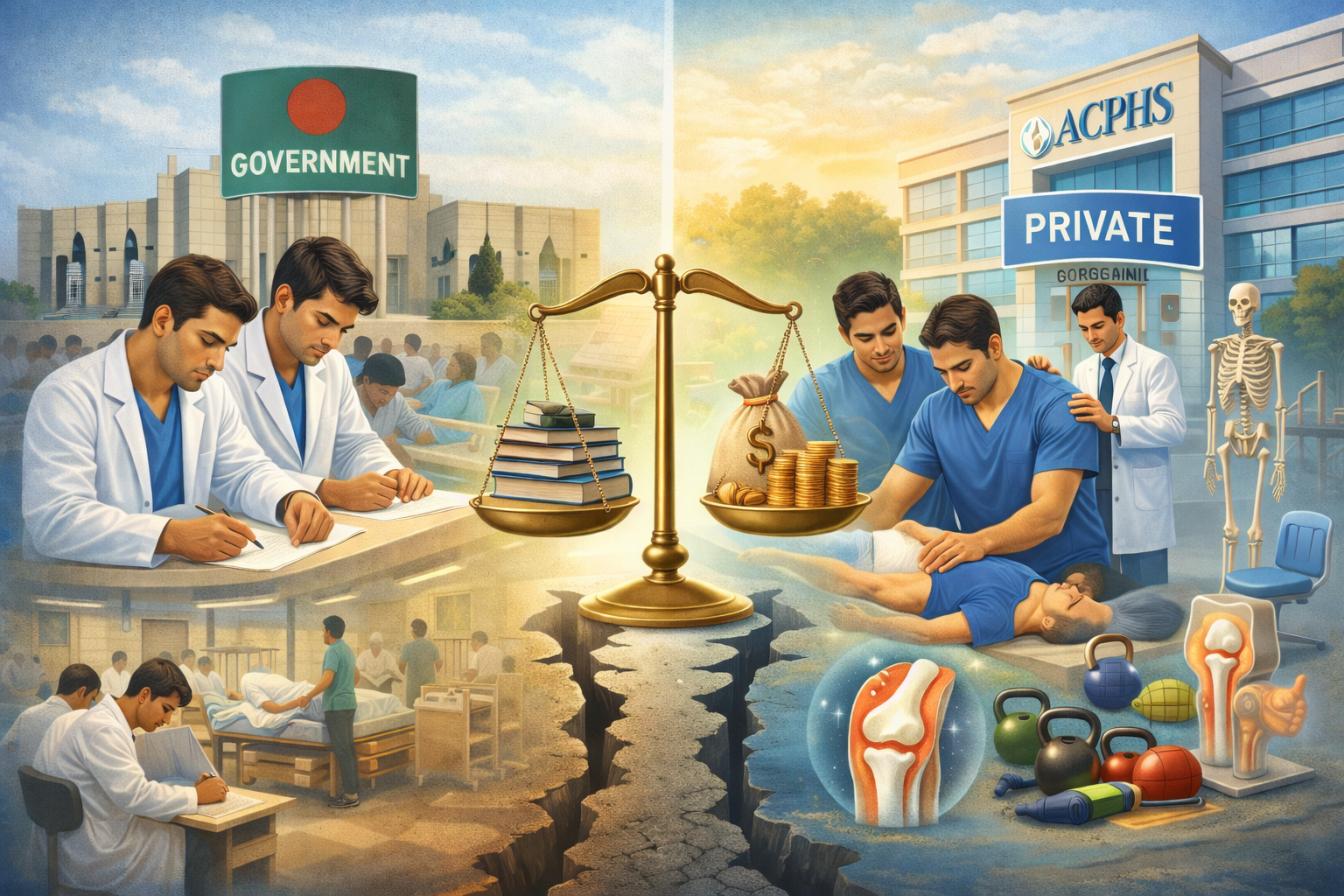
Choosing between a government and a private physiotherapy college is one of the most important decisions for students aspiring to build a career in physiotherapy in Bangladesh. This choice not only affects the immediate academic journey but also shapes long-term professional competence, confidence, and career opportunities.
Understanding these differences helps students make an informed decision based on their academic goals, learning preferences, financial capacity, and career ambitions rather than relying on assumptions or social perceptions.
Overview of Physiotherapy Education in Bangladesh
Physiotherapy education in Bangladesh is still developing compared to many other countries. The number of institutions offering BSc Physiotherapy programs is limited, and the demand for seats is far higher than availability. Government colleges admit only a very small number of students each year, making competition extremely intense.
As a result, private physiotherapy colleges have emerged as the main contributors to producing physiotherapy graduates who serve in hospitals, rehabilitation centers, sports facilities, and community healthcare programs across the country.
However, the learning experience between government and private colleges differs significantly, and students must understand both advantages and limitations before making a decision.
Government Physiotherapy Colleges in Bangladesh
Government physiotherapy colleges are often perceived as prestigious because of their public status and lower tuition fees. These institutions usually operate under government medical colleges or public health universities.
Advantages of Gov Colleges
- Affordability: Tuition fees are significantly lower, making them accessible to students from all backgrounds.
- Recognition: Strong academic recognition and long-established institutional reputation.
- Patient Volume: Exposure to large public hospitals with a diverse and high volume of clinical cases.
Limitations to Consider
- Extreme Competition: Very limited seats mean many qualified students miss out.
- Overcrowded Settings: High patient loads can limit hands-on practice, leading to more observation than actual skill development.
- Resources: Potential for outdated equipment and slower infrastructure development due to bureaucratic processes.
Private Physiotherapy Colleges in Bangladesh
Private physiotherapy colleges have become the backbone of physiotherapy education in Bangladesh. These institutions vary widely in quality, but the best private colleges offer highly structured, student-focused, and skill-oriented education.
Advantages of Private Colleges
- Greater Access: More seats available, allowing capable students to pursue their dreams without delay.
- Personalized Attention: Smaller class sizes allow for better mentoring and academic monitoring.
- Modern Facilities: Heavier investment in modern labs and technology to remain competitive.
- Structured Training: Organized rotations with clear learning objectives and active participation.
Challenges to Note
- Varied Quality: Not all private colleges maintain the same high standards.
- Commercialization: Some institutions may prioritize profit over educational quality.
- Faculty: Occasional shortages of highly experienced, full-time academic staff in newer colleges.
“A well-structured private college that offers strong faculty support, modern facilities, and guaranteed clinical exposure often delivers higher long-term value despite higher initial costs.”
Academic Differences & Skill Development
Teaching Style and Curriculum Delivery
Government colleges often follow rigid academic structures, with heavy emphasis on lectures and examinations. While the theoretical foundation is strong, practical integration may be limited.
In contrast, high-quality private colleges emphasize interactive learning, case-based discussions, and continuous practical assessments. This approach helps students develop clinical reasoning and decision-making skills early in their journey.
Clinical Exposure
Government colleges provide exposure to high patient volumes, but hands-on practice can be limited due to overcrowding. Private colleges, especially well-managed ones, offer more supervised practice opportunities with smaller student groups, making skill development more systematic.
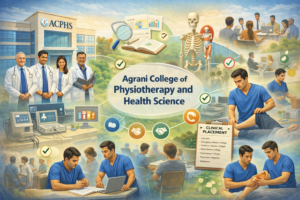
The Role of Agrani College of Physiotherapy and Health Science
Agrani College of Physiotherapy and Health Science (ACPHS) represents a model private institution that addresses many limitations commonly associated with private education. By focusing on quality rather than quantity, ACPHS ensures:
- International Alignment: A curriculum that meets both national and global standards.
- Practical Focus: Continuous lab and clinical training sessions.
- Expert Faculty: Full-time qualified faculty dedicated to student success.
- Support System: Transparent academic systems and personalized student mentoring.
Conclusion: Quality Matters More Than Category
The debate between government and private physiotherapy colleges in Bangladesh should not focus solely on labels. Both systems have strengths and limitations. Ultimately, the quality of education, clinical training, and professional preparation matters far more than institutional category.
Students should evaluate colleges based on outcomes, facilities, faculty, and learning environment. Institutions like Agrani College of Physiotherapy and Health Science show that private colleges can deliver excellence that prepares students for professional confidence and long-term career satisfaction.