Physiotherapy in 2026 is increasingly shaped by technology that enhances assessment accuracy, treatment effectiveness, patient engagement, and rehabilitation outcomes. While physiotherapy remains fundamentally a hands-on and movement-based profession, modern technologies now support physiotherapists in making better clinical decisions and delivering more personalized care.
In Bangladesh, the adoption of physiotherapy technology is gradually increasing, especially in institutions that prioritize modern education and clinical competence. This article explores the top physiotherapy technologies used in 2026, while clearly highlighting how Agrani College of Physiotherapy and Health Science (ACPHS) prepares students to use technology ethically and effectively without becoming technology-dependent.
It is important to understand that technology in physiotherapy is not meant to replace clinical reasoning or manual skills. Instead, it should complement assessment, exercise therapy, and patient education. This article explores the top physiotherapy technologies used in 2026, while clearly highlighting how Agrani College of Physiotherapy and Health Science (ACPHS) prepares students to use technology ethically and effectively without becoming technology-dependent.
Top Physiotherapy Technologies in 2026
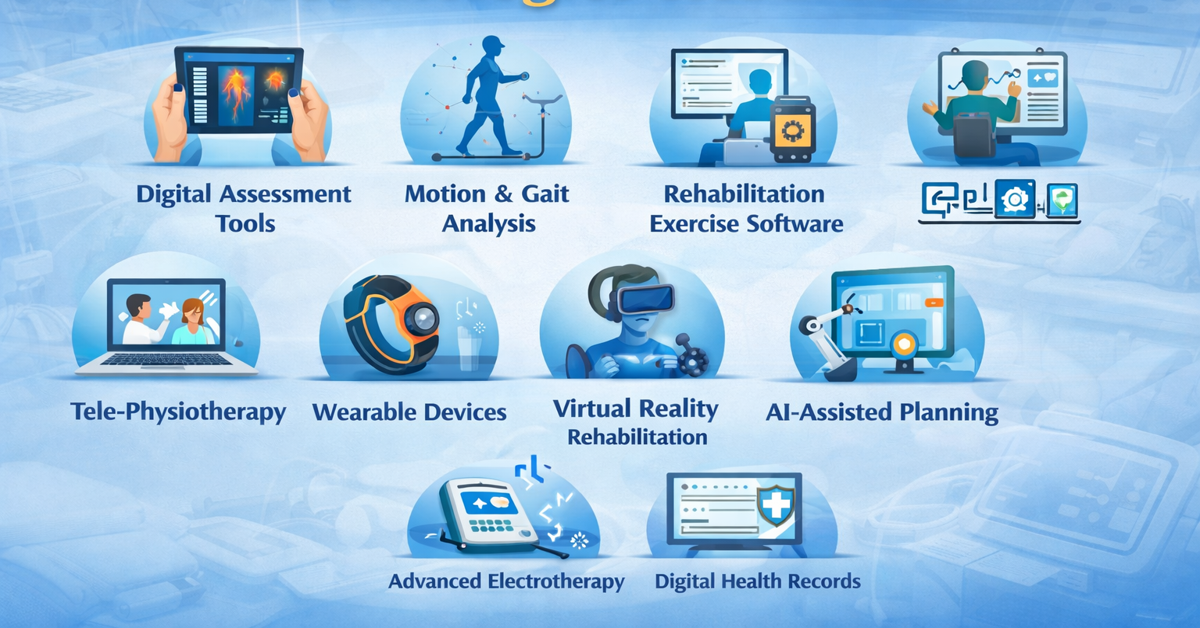
Digital Patient Assessment Tools
Used to document posture, range of motion, functional movement, and pain patterns objectively. These tools help track progress and communicate findings clearly. ACPHS trains students to use these as supportive aids while maintaining strong hands-on skills.
Motion Analysis & Gait Systems
Study walking patterns and functional movement to identify dysfunctions invisible to the eye. ACPHS emphasizes understanding biomechanics so students interpret data correctly rather than relying blindly on output.
Rehabilitation Exercise Software
Platforms that allow efficient design and modification of exercise programs. ACPHS ensures students integrate this with individualized planning, choosing exercises based on assessment rather than generic templates.
Tele-Physiotherapy & Remote Rehab
Expanded significantly for video consultations and digital monitoring. ACPHS trains students in professional communication and ethical practice, essential for safe remote services.
Wearable Rehabilitation Devices
Monitor movement, posture, and activity levels in real-time. ACPHS teaches students to interpret wearable data critically and integrate it with clinical findings rather than replacing evaluation.
Virtual Reality (VR)
Used for neurological rehab and balance training to enhance patient engagement. ACPHS emphasizes that VR must be applied within a structured rehabilitation framework guided by clinical reasoning.
Advanced Modalities and Artificial Intelligence
Electrotherapy and Advanced Modalities
Modern electrotherapy devices in 2026 are more precise and evidence-based. These technologies are used to support pain management and muscle activation when indicated. ACPHS teaches students to use electrotherapy responsibly as an adjunct to exercise and manual therapy rather than as a primary treatment.
Artificial Intelligence in Physiotherapy Planning
AI-assisted platforms are emerging to support treatment planning and outcome prediction. These tools analyze large datasets to suggest rehabilitation strategies. ACPHS prepares students to understand the limitations of AI and emphasizes that final clinical decisions must always be made by trained physiotherapists, not algorithms.
Digital Documentation and Electronic Health Records
Electronic health record systems improve documentation accuracy, continuity of care, and interdisciplinary communication. Physiotherapists in 2026 are expected to maintain digital records professionally. ACPHS trains students in systematic documentation and professional record-keeping aligned with modern healthcare standards.
Why Technology Must Be Balanced with Clinical Skills
ACPHS stands out by teaching students to balance technology with strong assessment skills, manual therapy, exercise prescription, and patient education. Technology training at ACPHS ensures students learn:
- Ethical Use: When to use technology and when not to use it.
- Prioritizing Safety: Focusing on patient safety and effectiveness over machine output.
- Adaptability: Foundational skills that remain relevant regardless of technological shifts.
- Professional Foundations: Maintaining the core identity of physiotherapy while being future-ready.
Challenges of Technology Adoption in Bangladesh
Limited resources, high costs, and a lack of training can slow technology adoption. However, physiotherapists with strong foundational education can adapt to new technologies more easily when opportunities arise. ACPHS equips students with adaptable skills that remain relevant regardless of technological changes.
Role of Education in Future Physiotherapy Technology
Education plays a key role in shaping how technology is used in physiotherapy. Institutions that emphasize reasoning and ethics produce professionals who use technology wisely. ACPHS encourages critical thinking and lifelong learning, preparing students for ongoing technological evolution.
Conclusion: ACPHS Trains Future-Ready Physiotherapists
The top physiotherapy technologies used in 2026 support assessment accuracy, patient engagement, and treatment effectiveness. However, technology should always serve clinical reasoning, not replace it.
With its strong emphasis on foundational skills, ethical practice, and thoughtful technology integration, Agrani College of Physiotherapy and Health Science (ACPHS) prepares physiotherapists who are confident, adaptable, and future-ready in an increasingly technology-driven healthcare environment.