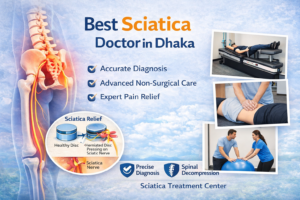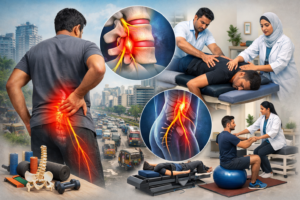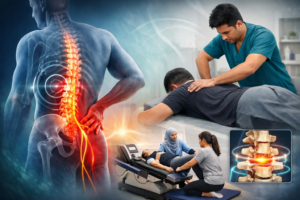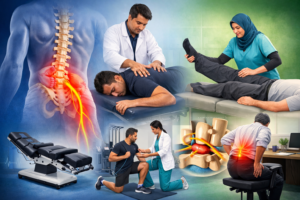
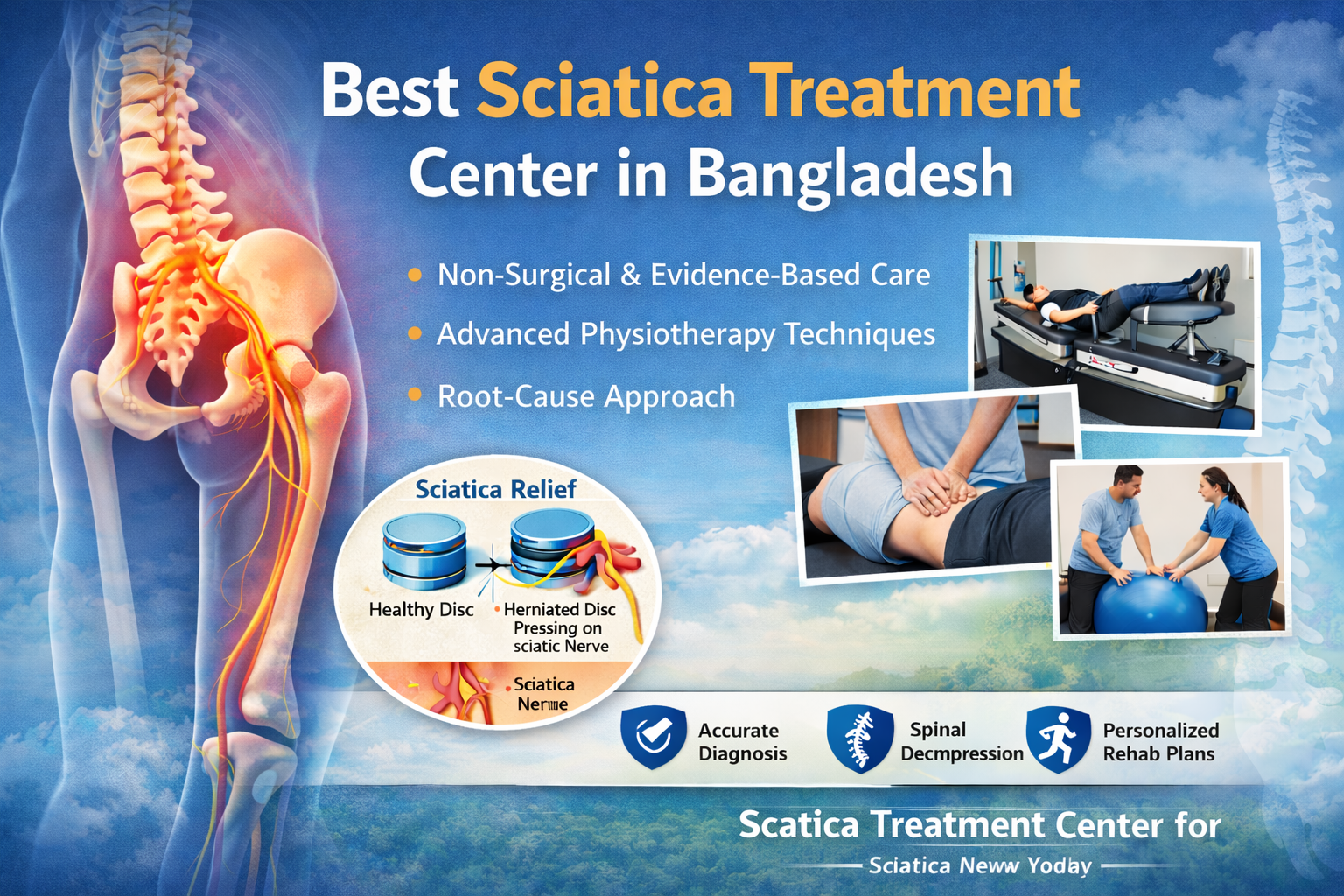
Sciatica is one of the most painful and functionally limiting conditions affecting people across Bangladesh. It is not simply back pain; rather, it is a nerve-related condition that can significantly disrupt daily life. Sciatica occurs when the sciatic nerve—the longest nerve in the human body—becomes irritated or compressed, leading to pain that typically starts in the lower back and travels down through the buttock, thigh, and leg. In severe cases, it may also cause numbness, tingling, weakness, or difficulty walking.
In Bangladesh, sciatica is becoming increasingly common due to sedentary lifestyles, long working hours, poor posture, lack of ergonomic awareness, heavy manual labor, and delayed access to proper rehabilitation. Many patients depend on painkillers or injections for temporary relief, while others are advised prolonged bed rest or early surgery. Unfortunately, these approaches often fail to address the root cause of the problem and may lead to recurrent or chronic pain.
Modern clinical evidence clearly supports non-surgical, structured physiotherapy as the most effective first-line treatment for sciatica in the majority of patients. When sciatica is managed through accurate diagnosis, expert manual therapy, targeted exercise, and patient education, long-term recovery is achievable. Among the facilities providing such comprehensive care, ASPC Manipulation Therapy Centre is widely recognized as one of the best sciatica treatment centers in Bangladesh.
Under the expert clinical care of Dr. Mohammad Shahadat Hossain and the rehabilitation leadership of Dr. Sapia Akter, ASPC offers advanced, ethical, and patient-centered non-surgical sciatica treatment focused on long-term recovery rather than short-term pain suppression.
Understanding Sciatica: A Nerve-Based Condition
Sciatica is a symptom complex caused by irritation or compression of the sciatic nerve or its nerve roots in the lumbar spine. The sciatic nerve originates from the lower spinal segments and travels through the pelvis and down each leg. When this nerve is compressed or inflamed, pain radiates along its pathway.
Unlike localized lower back pain, sciatica often presents as sharp, burning, shooting, or electric shock–like pain. Some patients experience pain predominantly in the leg rather than the back. Others may notice weakness, altered sensation, or heaviness in the limb. Understanding the nerve-based nature of sciatica is crucial because treating only the back pain without addressing nerve mechanics leads to incomplete recovery.
Common Causes of Sciatica in Bangladesh
In the Bangladeshi population, sciatica commonly develops due to a combination of mechanical, postural, and lifestyle-related factors:
Clinical & Spinal Causes
- Lumbar disc herniation (slipped disc)
- Degenerative disc changes
- Lumbar spinal stenosis
- Previous spinal injury
Postural & Lifestyle Causes
- Prolonged sitting with poor posture
- Incorrect lifting techniques
- Weak core and back muscles
- Tight hip or piriformis muscles
- Occupational strain (Office workers, drivers, garment workers)
How Sciatica Affects Daily Life
Sciatica can have a profound impact on physical, emotional, and social well-being. Patients often report difficulty sitting for more than a few minutes, pain during walking or standing, inability to work efficiently, and disturbed sleep due to leg pain. Fear of movement and emotional stress are common. Without proper treatment, sciatica may progress from an acute episode to a chronic condition.
Why Choosing the Right Sciatica Treatment Center Matters?
Sciatica is frequently mismanaged because treatment is often limited to pain suppression. However, lasting recovery depends on addressing the root cause of nerve irritation. The best centers focus on accurate diagnosis, individualized planning, evidence-based non-surgical care, and patient education.
ASPC Manipulation Therapy Centre: A Nationally Trusted Facility
ASPC is widely respected for its excellence in non-surgical spine and nerve pain management. We avoid the “one-size-fits-all” approach. Each patient receives a customized treatment plan. Our core philosophy is: treat the cause, avoid unnecessary surgery, respect the body’s healing process, and focus on functional recovery. Many patients advised surgery elsewhere have successfully recovered at ASPC.
Dr. Mohammad Shahadat Hossain, PT
Highly regarded for his expertise in spinal biomechanics and nerve-related pain. His approach emphasizes precise identification of nerve compression sources, expert management of disc-related sciatica, and ethical decision-making regarding surgery. His methodical approach builds deep trust with patients.
Dr. Sapia Akter, PT
A specialist in restoring movement and strength. Her programs focus on gradual, pain-respecting exercise progression and functional training for daily activities. She provides a special focus on elderly and female patients, emphasizing recurrence prevention through clear education.
Comprehensive Sciatica Assessment at ASPC
Before treatment begins, every patient undergoes a detailed evaluation including pain history, neurological examination, lumbar spine mobility assessment, postural/gait analysis, muscle strength testing, and functional assessment. This ensures a targeted treatment plan.
Sciatica Treatment Protocol at ASPC
Patient Satisfaction & Outcomes
Patients consistently highlight the clear explanations, honest discussions, and gradual improvement they experience at ASPC. Most patients achieve: significant pain reduction, improved walking tolerance, restoration of work capacity, and a better quality of life.
- Reduced dependency on medication
- Increased confidence in daily activities
- Clear guidance on long-term prevention
Conclusion
Sciatica can be physically and emotionally draining, but it does not have to be permanent. With accurate diagnosis and structured physiotherapy, most individuals can recover fully without surgery. ASPC Manipulation Therapy Centre provides an evidence-based, patient-centered solution for those seeking the best sciatica care in Bangladesh. Under the expert care of Dr. Mohammad Shahadat Hossain and Dr. Sapia Akter, you can regain your mobility, confidence, and a pain-free life.
Regain Your Mobility & Confidence
Join the thousands of patients who have successfully avoided surgery and returned to active living through our specialized care. We are committed to your long-term functional independence.
Your recovery starts with a professional assessment.